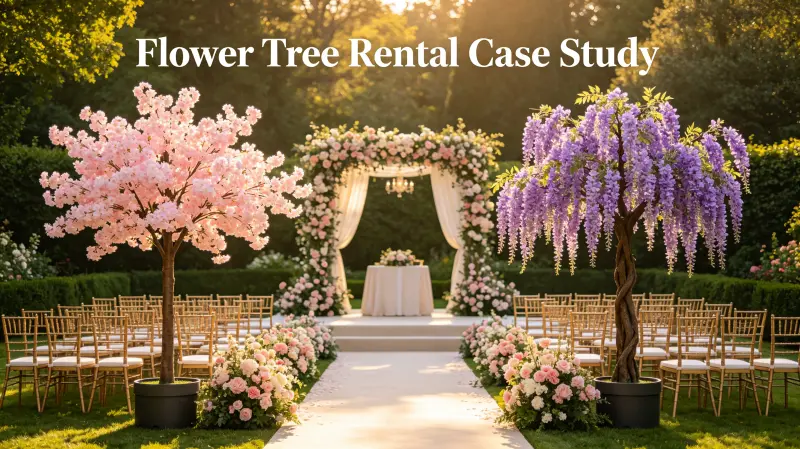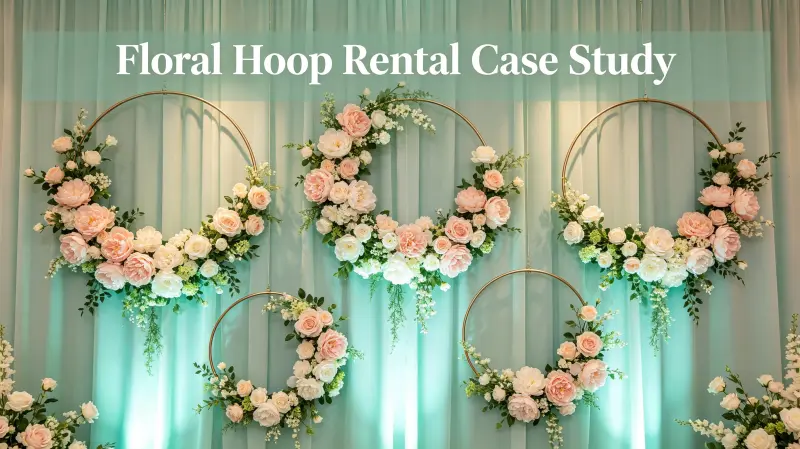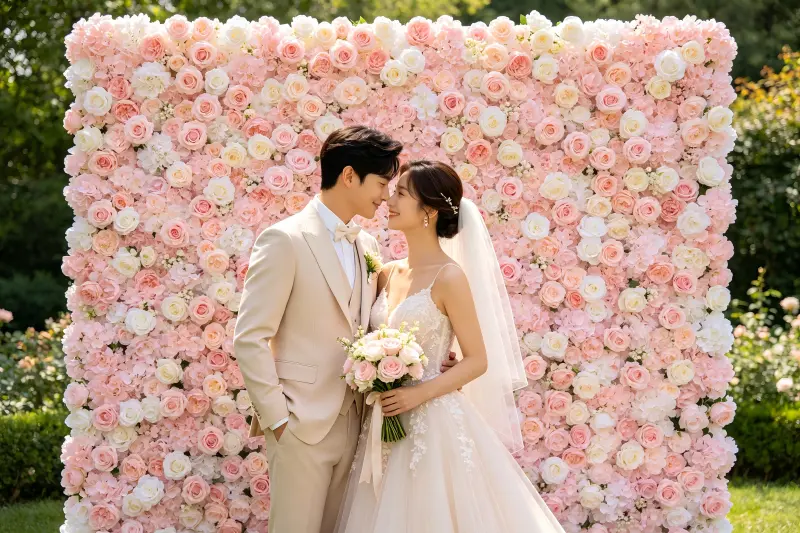
When a small event rental company in the US decided to add artificial flower walls to their inventory, they weren't sure what to expect. Would clients actually rent them? Would the quality hold up? How long would it take to see a return on investment?
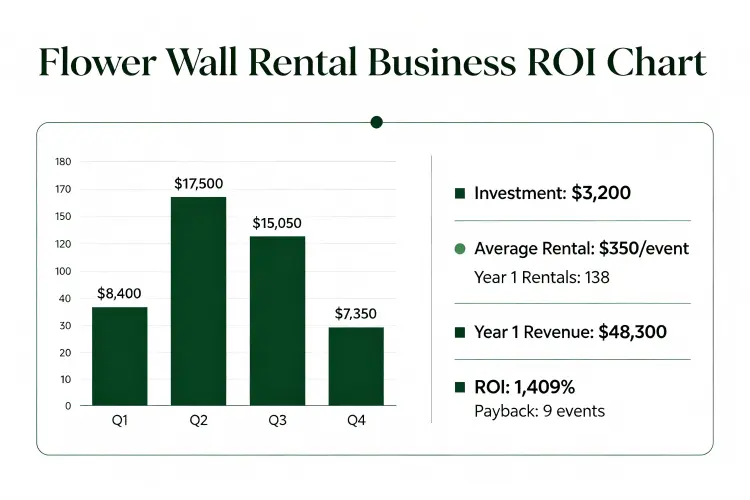
Eighteen months later, flower walls have become their highest-margin rental category — generating over $48,000 in annual revenue from an initial investment of just $3,200.
This is the complete case study: what they bought, how much they spent, how much they made, and exactly what made it work. Whether you're just starting out or looking to expand your inventory, the lessons here are directly applicable to your rental business.
Client Background
Premier Event Rentals started as a traditional linen and tableware rental company. They had a solid client base but struggled with low margins — linens and dishes are commodities, and clients constantly negotiated on price.
Owner Sarah Mitchell knew she needed to add higher-margin, differentiating products. After attending a wedding industry expo in early 2024 and seeing flower walls everywhere, she decided to test the category.
The Challenge
The Problems They Faced
- Low margins on existing inventory: Linens and tableware averaged 15-20% profit margin after cleaning, repairs, and replacement costs
- Price competition: Three other rental companies in the area offered identical products, leading to constant price wars
- No "wow" factor: Clients wanted Instagram-worthy backdrops but Premier had nothing to offer beyond basic draping
- Limited upsell opportunities: Average order value was stuck at $800-1,200 per event with no natural add-on products
- Seasonal revenue swings: Slow winter months (January-March) created cash flow pressure
Sarah considered several product categories — photo booths, lounge furniture, LED walls — but each had significant drawbacks. Photo booths required technical support and constant maintenance. Lounge furniture was bulky and hard to transport. LED walls were expensive ($10,000+ for a basic setup).
Flower walls checked all the boxes: high perceived value, relatively low cost, easy to transport, simple to set up, and clients were already asking for them.
The Solution
What They Did
After researching options for two weeks, Sarah decided to source directly from a Chinese manufacturer rather than buying from a US wholesaler. The price difference was significant — US wholesalers were charging $80-150 per panel, while direct factory pricing was $25-60 per panel for the same quality.
Initial inventory purchase (March 2024):
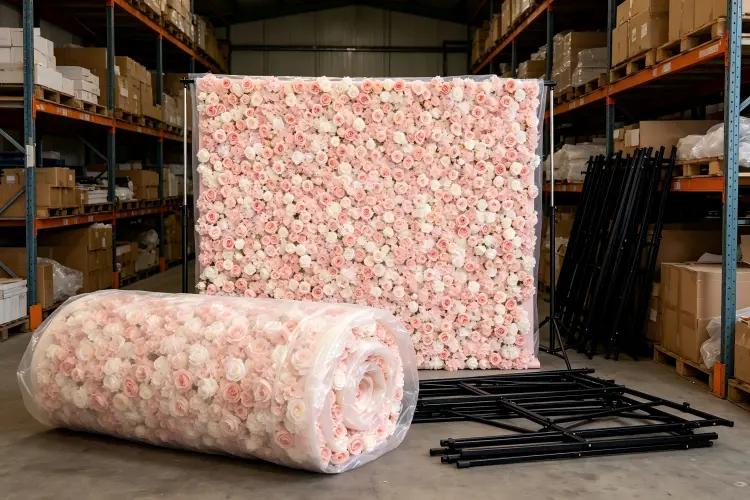
- 8 × 40×60cm blush pink & ivory flower wall panels (standard commercial grade)
- 8 × 40×60cm white & sage green flower wall panels
- 4 × 40×60cm burgundy & blush fall-themed panels
- 2 × adjustable backdrop stands (8ft × 10ft)
- 2 × carrying/storage bags
- Spare flower heads (10% extra per order)
Total initial investment: $3,200 (including shipping via air freight)
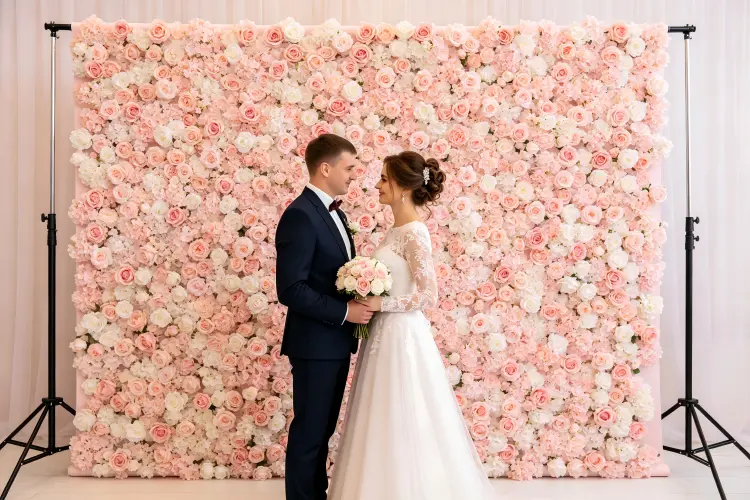
The panels were the roll-up fabric-backed type — not rigid panels — which made them much easier to transport and store. They could be rolled up like a carpet, stacked in a carrying bag, and transported in a standard cargo van.
Investment Breakdown
Where the Money Went
For comparison, buying the same 20 panels from a US wholesaler would have cost $6,000-8,000 — nearly double. By sourcing direct from China, Premier saved 60-70% on their initial inventory.
Additional investments in Year 2 (2025):
- 10 more panels in new colors (dusty blue, terracotta): $1,100
- 1 more backdrop stand: $200
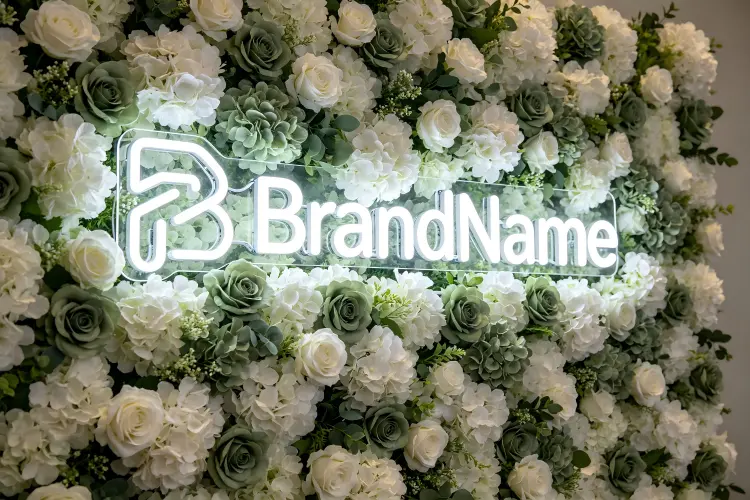
- Custom neon sign to pair with flower walls: $350
- Year 2 additional investment: $1,650
Revenue & ROI Results
The Numbers Speak for Themselves
Revenue breakdown by quarter (Year 1):
Year 2 projection (based on first 6 months): $62,000-68,000 — a 30-40% increase as word spread and repeat clients booked flower walls for multiple events.
But the revenue numbers only tell part of the story. The real impact was on the overall business:
- Average order value increased 35% — from $950 to $1,280 per event, because clients who rented flower walls also added on other items
- New client acquisition improved — flower walls became a marketing tool, with clients finding Premier through Instagram photos of their flower wall setups
- Winter revenue stabilized — corporate holiday parties and Valentine's Day events kept flower walls renting through the slow months
- Margins improved — flower walls carried 85%+ profit margin (after setup labor and transport), compared to 15-20% on linens
5 Key Success Factors
Not every rental company that adds flower walls sees this level of success. Here are the 5 specific factors that made Premier's flower wall category take off:
1. Right Color Selection
Premier started with three color palettes that cover 80% of events: blush pink & ivory (most popular for weddings), white & sage green (versatile for boho and minimalist events), and burgundy & blush (fall weddings and holiday galas). They avoided trendy colors that might look dated in a year.
2. Professional Photography
Within the first month, Sarah hired a photographer to shoot styled photos of each flower wall setup. These photos were used on the website, Instagram, and marketing materials. "You can't rent what clients can't see," Sarah says. "Professional photos paid for themselves in the first two bookings."
3. Bundling & Upselling
Premier created package deals: "Ceremony Package" (flower wall + arch + aisle markers) and "Reception Package" (flower wall + neon sign + table centerpieces). Bundling increased average order value and made it harder for clients to price-shop individual items.
4. Fast, Reliable Setup
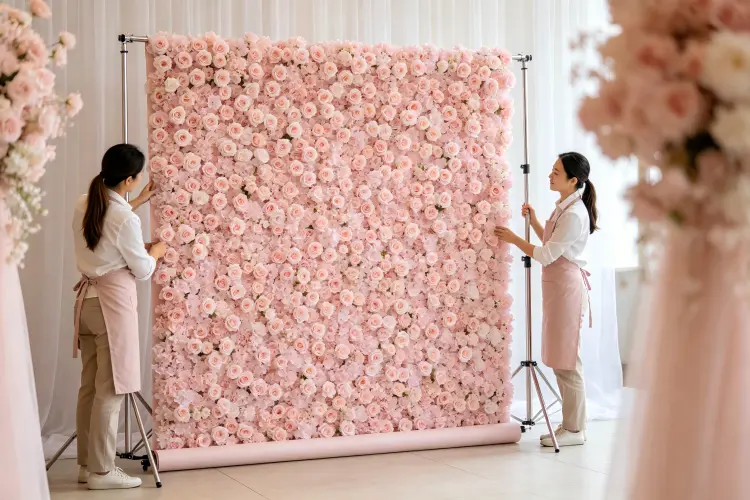
They developed a 15-minute setup system using roll-up panels and adjustable stands. Two staff members could set up a full flower wall in under 20 minutes. This meant they could do multiple setups in one day and keep labor costs low.
5. Quality That Withstands Repeated Use
The commercial-grade panels Premier purchased have held up remarkably well. After 138 rentals across 20 panels, only 2 panels needed minor repairs (re-gluing a few flower heads). The fabric backing makes them durable and easy to roll up without damage. "We've had panels for 18 months that still look brand new," Sarah reports.
Key Takeaways for Your Business
What You Can Learn from This Case
- Start small, prove the concept: Premier started with just 20 panels and 2 stands ($3,200 total). You don't need a massive inventory to start generating revenue.
- Source direct from China: The 60-70% savings vs US wholesalers means you break even faster and have higher margins. Just make sure to order samples first.
- Invest in professional photos: This is the #1 marketing lever for rental products. Clients book what they can see.
- Create packages, not individual items: Bundling increases order value and reduces price competition.
- Choose versatile colors: Blush, white/sage, and burgundy cover most events. Avoid overly trendy colors.
- Roll-up fabric panels > rigid panels: Easier to transport, store, and set up. Less damage during transport.
- Plan for slow seasons: Corporate holiday events and Valentine's Day can keep flower walls renting through winter.
FAQ
You can start with as little as $1,500-2,500 for 10 panels + 1 stand + shipping. Premier started with $3,200 for 20 panels + 2 stands, which allowed them to serve two events simultaneously. The key is starting with enough panels to build a full 8×8ft wall (typically 12-15 panels per wall).
At an average rental price of $300-350 per wall, most businesses break even after 8-12 rentals. Premier broke even after their 10th rental (about 6 weeks into their first season). This is one of the fastest payback periods in the event rental industry.
Commercial-grade fabric-backed panels last 50+ rentals with proper care. Premier's panels have done 138 rentals across 20 panels (average 7 rentals per panel) and still look excellent. With proper storage (rolled up, in bags, cool dry place), they can last 3-5 years or more.
Rental prices vary by market: $200-350 in small/medium markets, $300-500 in large cities, $400-700+ in luxury markets. Setup/teardown and delivery are usually additional charges ($50-150 each). Premier averages $350 per rental plus $75 setup/delivery.
With roll-up fabric panels and adjustable stands, two people can set up a full flower wall in 15-20 minutes. Teardown takes about the same. The learning curve is minimal — most teams are efficient after 2-3 setups. The key is having a system: lay out the stand, unroll panels, attach with Velcro or ties, adjust for gaps.
Yes, but with precautions. Wind is the main concern — always use sandbags or weights on the stand base. Direct sun will fade flowers over time, so consider a separate "outdoor" set. Light rain is fine for most artificial flowers, but heavy rain can cause sagging. Never leave them unattended outdoors overnight.
Ready to Add Flower Walls to Your Rental Inventory?
At Xibo Floral, we manufacture commercial-grade artificial flower wall panels in 20+ color palettes. Our roll-up fabric-backed panels are designed for the rental industry — durable, easy to transport, and built to last 50+ uses. With 4000㎡ of factory space and direct factory pricing, we help rental businesses achieve faster ROI and higher margins.
Get Wholesale Pricing & Free Samples