- Monochrome Floral Design: The Most Defining Trend of 2027
- What Is Monochrome Floral Design? The Core Principle
- Why Single-Color Florals Are Dominating 2027 Weddings
- 6 Monochrome Color Palettes Rental Businesses Need to Stock
- Texture & Layering: How to Make Single-Color Look Rich
- Monochrome vs. Multi-Color: Honest Comparison
- 5 High-Demand Applications for Monochrome Florals
- Rental Business Opportunity: Pricing & Packages
- Sourcing Guide: Quality Checks for Single-Color Inventory
- FAQ
Monochrome Floral Design: The Most Defining Trend of 2027
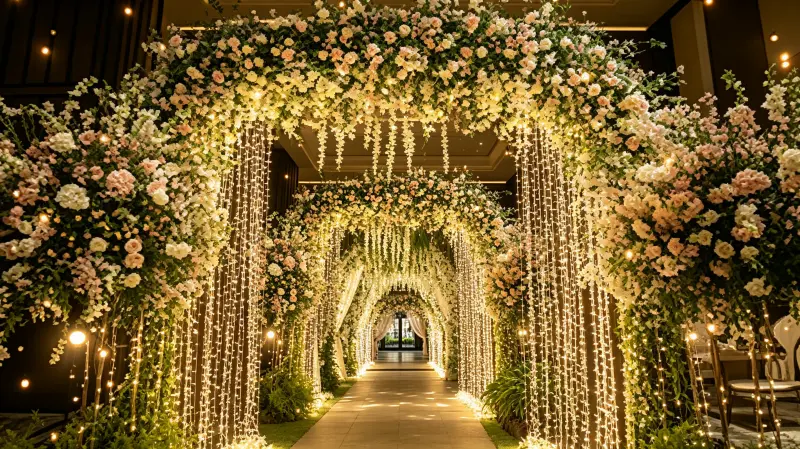
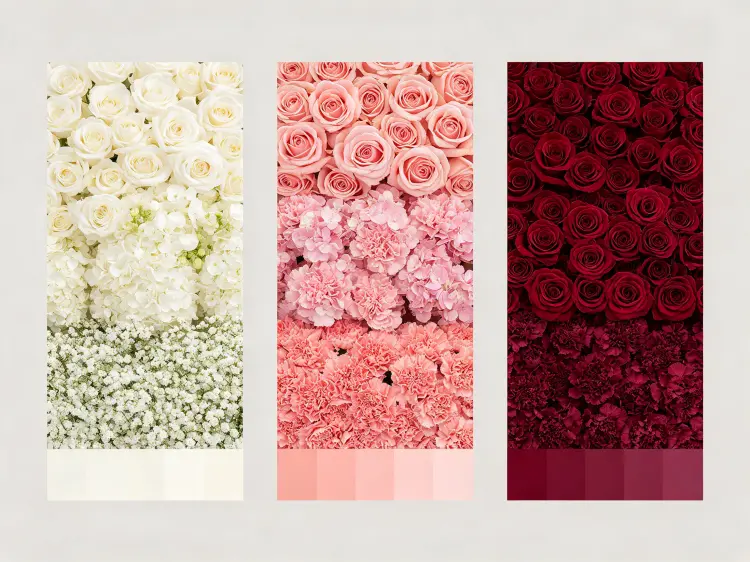
Walk through any 2027 wedding showcase and one aesthetic stands out more than any other: monochrome floral design. Entire ceremonies, receptions, and photo backdrops built from a single color family — all white, all blush, all burgundy — relying not on color contrast but on texture, shape, and depth to create visual drama. It is the ultimate statement of confidence: "I don't need five colors to look luxurious."
Search volume for "monochrome wedding flowers" grew 89% from 2025 to 2026, and Pinterest named "single-color palettes" one of its top 5 wedding trends for 2027. For rental business owners, this is not a niche look — it's becoming the default for modern, sophisticated couples. This guide covers everything: the core principle, 6 must-stock color palettes, texture techniques, pricing strategy, and sourcing from China factories.
Want Monochrome Floral Inventory at Factory-Direct Pricing?
Xibo Floral: Single-color flower walls, arches, and centerpieces from $35-120. MOQ 1 piece. Custom color matching. 7-15 day production.
Request Monochrome Collection CatalogWhat Is Monochrome Floral Design? The Core Principle
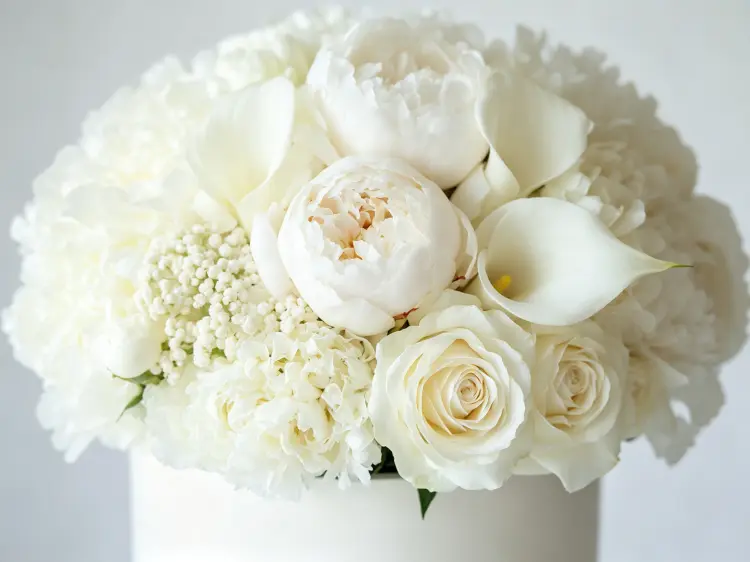
Monochrome floral design uses flowers and foliage from a single color family, but with intentional variation in value (lightness/darkness), saturation (intensity), and texture. An all-white arrangement is not just 50 white roses — it combines ivory garden roses, cream peonies, pure white hydrangea, white calla lilies, and silvery dusty miller, each offering a different shape, size, and surface quality.
The key principle: color is restricted, texture is amplified. When you remove color contrast as a design tool, every other element becomes more important. Petal softness, bloom size, stem architecture, foliage shape — these do the heavy lifting. The result is a look that feels intentional, curated, and expensive, rather than "matching."
There are three levels of monochrome execution:
- True monochrome: One exact hue, varying only in value (e.g., all shades of pink from pale blush to deep fuchsia).
- Near-monochrome: One hue plus neutral white/cream/ivory for softening (the most popular for weddings).
- Tonal monochrome: One hue plus its adjacent neighbor on the color wheel (e.g., pink + lavender, blue + teal).
Why Single-Color Florals Are Dominating 2027 Weddings
Four forces are driving monochrome from "editorial experiment" to "mainstream default":
| Driver | What Changed | Impact on Rental Demand |
|---|---|---|
| Minimalist / quiet luxury aesthetic | Couples want "effortless expensive," not "more is more" | Monochrome reads as high-end; multi-color reads as busy |
| Social media cohesion | Instagram grids favor consistent, single-color feeds | Monochrome backdrops photograph consistently across all guest photos |
| Venue architecture | Modern venues (warehouses, glasshouses) have neutral, minimal spaces | Single-color florals complement, don't compete with, modern venues |
| Cost efficiency | Couples realize fewer colors = fewer SKUs = lower floral budget | Rental businesses can stock 3-4 monochrome sets serving 80% of clients |
The "quiet luxury" movement is the biggest driver. In a market saturated with rainbow-colored balloon arches and neon signs, monochrome florals signal taste and restraint. Luxury wedding planners now routinely specify "all-white" or "all-blush" as the default palette for high-end clients — not because it's safe, but because it's the most visually sophisticated option available.
6 Monochrome Color Palettes Rental Businesses Need to Stock
These are the 6 most-booked monochrome palettes for 2027, ranked by demand:
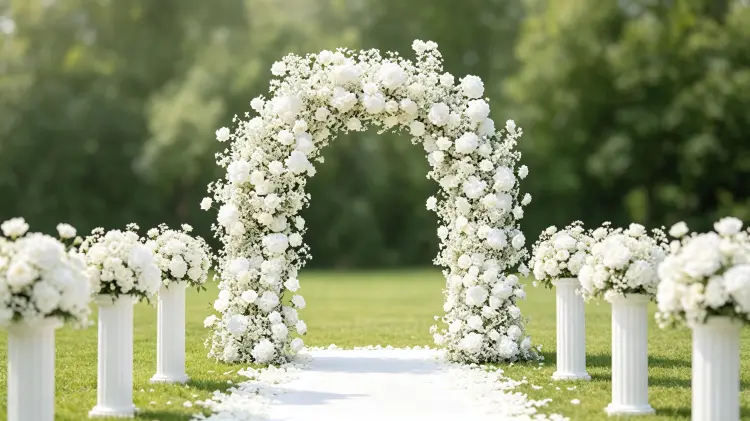
1. All White / Ivory (35% of monochrome bookings)
The timeless default. Ivory garden roses, white peonies, white hydrangea, white calla lilies, white delphinium, silver dusty miller, eucalyptus. Why it works: Complements every venue style, every season, every bridesmaid dress color. Rental premium: Standard pricing (no surcharge). Factory cost: $35-90/piece.
2. All Blush / Pink (25%)
From pale blush to deep rose: blush garden roses, pink peonies, ranunculus, pink astilbe, mauve roses, silver foliage. Why it works: Romantic without being childish; the 2027 version uses deeper rose tones, not baby pink. Rental premium: +10%. Factory cost: $40-100/piece.
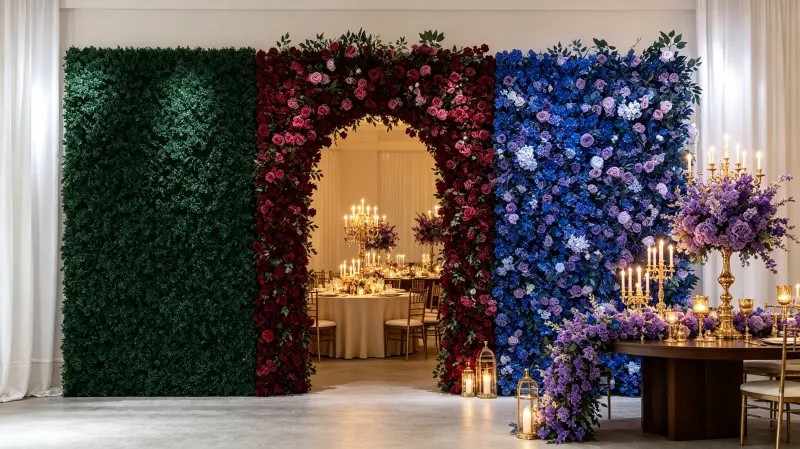
3. All Burgundy / Wine (15%)
Deep burgundy peonies, wine roses, dark dahlias, maroon carnations, chocolate cosmos, dark purple foliage. Why it works: Dramatic, moody, perfect for fall/winter and historic venues. Rental premium: +15-20%. Factory cost: $45-110/piece.
4. All Lavender / Purple (10%)
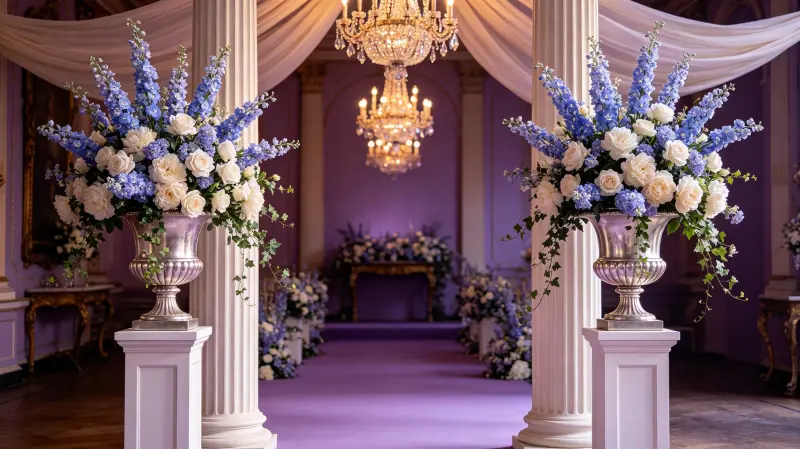
Lilac, lavender, deep purple: lavender roses, purple delphinium, lilac blooms, purple orchids, silver foliage. Why it works: Unique but still soft; Bridgerton-adjacent without being costume-y. Rental premium: +10%. Factory cost: $40-100/piece.
5. All Blue / Dusty Blue (8%)
Powder blue, dusty blue, navy: blue thistle, blue delphinium, navy hydrangea, blue orchids, eucalyptus. Why it works: Cool, modern, coastal; pairs with navy and gray suits. Rental premium: +10%. Factory cost: $40-100/piece.
6. All Green / Botanical (7%)
No flowers at all — pure foliage: eucalyptus, ferns, olive branches, monstera leaves, ivy, fern fronds. Why it works: Ultra-modern, gender-neutral, perfect for industrial and botanical venues. Rental premium: Standard. Factory cost: $30-80/piece (foliage-only is cheaper).
Texture & Layering: How to Make Single-Color Look Rich
The biggest mistake rental businesses make with monochrome inventory is buying 50 identical roses in the same shade. That's not monochrome design — that's a flat, boring block of color. Here's how to build texture and depth into single-color arrangements:
- Mix bloom sizes. Large focal flowers (peonies, hydrangea, garden roses) + medium blooms (ranunculus, roses) + small accents (astilbe, baby's breath, wax flower) + filler foliage. Size variation creates visual rhythm.
- Vary petal texture. Soft velvety roses + crisp calla lilies + papery ranunculus + waxy orchids + feathery astilbe. Different surface qualities catch light differently, creating depth even in one color.
- Use value gradient. Place lightest blooms at the top/center, darkest at the edges/bottom. This creates a natural focal point and dimensionality. A flat all-white arrangement looks like a blob; a gradient white arrangement looks sculpted.
- Add architectural elements. Single-stem calla lilies, tall delphinium spires, or branching forsythia break up roundness and add structural interest. Monochrome doesn't mean all-round.
- Incorporate negative space. Don't fill every gap. Sparse, intentional spacing between blooms creates a modern, editorial feel. Dense = traditional; airy = 2027.
- Play with finish. Matte petals + glossy leaves + metallic-dusted foliage (silver or gold) adds another layer of texture. A light dusting of silver spray on select leaves elevates all-white arrangements instantly.
Pro tip for rental inventory: When sourcing monochrome sets from China, always request a "texture mix" — 40% focal blooms, 30% medium blooms, 20% filler, 10% architectural stems. Pre-mixed sets save you assembly time and ensure professional-looking arrangements every time.
Monochrome vs. Multi-Color: Honest Comparison
Should you replace your multi-color inventory with monochrome? No — but you should add monochrome as a core option. Here's the data:
| Factor | Monochrome | Multi-Color |
|---|---|---|
| Perceived luxury level | High — reads as curated and intentional | Medium — can look busy or generic |
| Venue compatibility | Excellent — complements modern/neutral venues | Good — needs matching to venue colors |
| Photography consistency | Excellent — consistent in all lighting | Variable — some colors wash out in photos |
| Inventory efficiency | High — 3-4 sets serve 80% clients | Low — need 8-10 color combinations |
| Client demand (2027) | Rising fast (+89% YoY search) | Stable / slightly declining |
| Rental pricing | +10-20% premium | Standard pricing |
| Setup speed | Faster — pre-matched sets | Slower — on-site color coordination |
| Best for | Modern, luxury, minimalist couples | Garden, boho, traditional couples |
Strategic takeaway: Stock 3-4 monochrome sets (white, blush, burgundy, green) as your core inventory, and keep 2-3 multi-color sets for clients who specifically request them. Monochrome sets will generate 60-70% of your floral bookings at higher margins.
5 High-Demand Applications for Monochrome Florals
1. Ceremony Backdrop / Arch
An all-white or all-blush flower arch is the single most-booked monochrome item. Creates a clean, focused frame for the couple. Rental price: $150-350. Upsell: Matching aisle markers +$75-150.
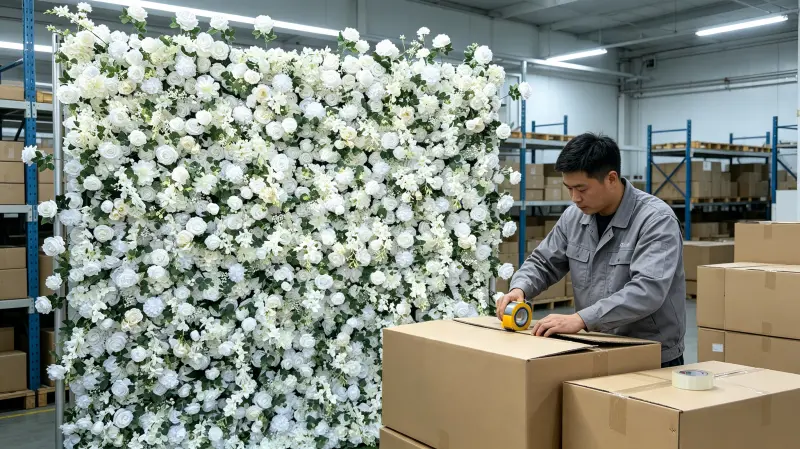
2. Flower Wall / Photo Backdrop
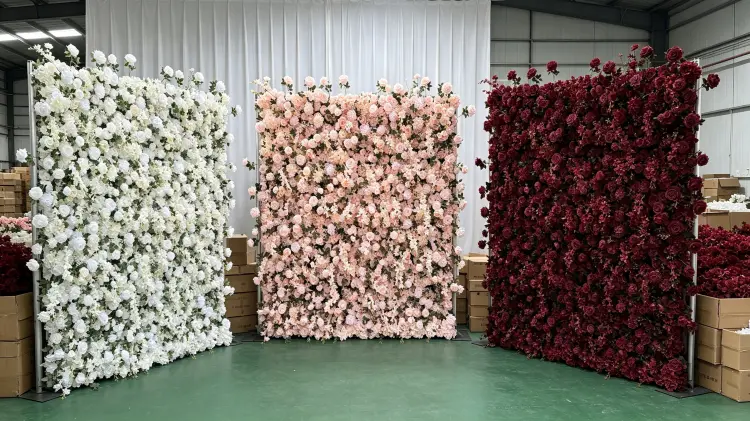
Monochrome flower walls are social media catnip — every guest photo has a consistent, clean background. All-white and all-blush walls are the most requested. Rental price: $200-450. Upsell: Neon sign overlay +$50-100.
3. Tablescape Centerpieces
Low, lush monochrome centerpieces (all-white or all-blush) let guests see each other across the table while looking luxurious. Mix heights: tall urns + low compotes + bud vases. Rental price: $25-60/table. Upsell: Full tablescape package (centerpieces + candles + table runner) +$15-30/table.
4. Hanging Installations
Monochrome hanging florals (all-white wisteria, all-green foliage hoops) create a "wow" ceiling moment without color clutter. Rental price: $250-500. Upsell: Installation labor +$100-200.
5. Bridal Party Bouquets & Boutonnieres
All-white or all-blush bouquets coordinate with everything and photograph beautifully. For rental businesses, offer artificial bouquet sets as an add-on. Rental price: $15-40/bouquet, $5-10/boutonniere. Upsell: Full bridal party package (bouquets + boutonnieres + corsages) +$100-200.
Rental Business Opportunity: Pricing & Packages
Starter Monochrome Collection (Investment: $600-1,000)
- 1 all-white flower arch (6x7ft) — $80-150
- 1 all-blush flower wall (8x8ft) — $100-180
- 8 low centerpieces (white + blush mix) — $160-320
- 4 aisle markers — $60-120
- Misc. vases and candles — $50-100
Revenue potential: Ceremony + reception package $500-800/event. Break-even: 2 events.
Premium Monochrome Collection (Investment: $1,500-2,500)
- 2 arches (white + burgundy) — $160-300
- 2 flower walls (white + blush) — $200-360
- 1 hanging installation (white wisteria) — $150-300
- 16 centerpieces (4 color palettes) — $320-640
- 8 aisle markers + 4 urns — $200-400
- Bridal party bouquet set — $100-200
Revenue potential: Full venue package $1,000-1,800/event. Break-even: 2-3 events. Annual revenue (15 bookings): $15,000-27,000.
Package Pricing Strategy
- Ceremony Only: Arch + aisle markers = $250-450
- Reception Only: Centerpieces (10 tables) + backdrop = $400-700
- Full Venue: Ceremony + reception + hanging + bridal party = $1,000-1,800
- Monochrome Premium: Add 15% for custom color matching or texture-mix premium sets
Monochrome = Highest Margin Floral Inventory
3-4 sets serve 80% of clients. +10-20% pricing premium. Break-even in 2-3 events. Factory-direct from $35/piece.
Get Monochrome Collection PricingSourcing Guide: Quality Checks for Single-Color Inventory
Monochrome inventory has unique quality requirements because color inconsistency is immediately obvious when everything is the same hue:
Color Consistency (Most Critical)
In a multi-color arrangement, a slightly off-shade rose goes unnoticed. In an all-white arrangement, one yellow-tinged rose screams "cheap." Check: Request a color swatch card before bulk ordering. Compare blooms under natural light, not just factory lighting. Xibo Floral uses batch-dyeing technology ensuring color consistency within Delta-E 2.0 (industry standard for "visually identical").
Texture Variety
Monochrome lives or dies by texture. Check: Ensure the factory offers at least 4-5 different flower types per color palette (focal + medium + filler + architectural). Avoid factories that only offer one flower type per color — your arrangements will look flat.
Petal Quality
Close-up photos of monochrome arrangements show every petal imperfection. Check: Real-touch or latex-coated petals mandatory. Avoid single-layer PE flowers — they look plastic in close-ups. Bend test: petals should flex without cracking.
Foliage Quality
Foliage is 30-40% of a monochrome arrangement's visual impact. Check: Look for realistic leaf veins, natural color variation (not flat green), and flexible stems. Eucalyptus should have a slight frosted/silver coating, not bright plastic green.
Modular Design
Best monochrome inventory is modular: flower wall panels that interlock, arch sections that reconfigure, centerpiece inserts that swap between vases. Check: Ask about panel dimensions, connection systems, and interchangeability. Velcro-based systems are fastest for rental use.
UV Stability
Single-color arrangements fade unevenly — one panel slightly more yellow than the next ruins the look. Check: Request UV-stabilized fabric rating. Xibo Floral's rental-grade monochrome sets use UV-stabilized petals rated for 2+ years of outdoor use.
FAQ
Monochrome floral design is rooted in centuries of classical design principles — Dutch Masters still-life paintings, Japanese ikebana, and minimalist art all use restricted color palettes to amplify form and texture. The current surge is driven by the quiet luxury movement and social media's preference for clean, consistent aesthetics. Industry analysts project monochrome as a top-3 wedding floral style through at least 2030. Unlike neon signs or balloon arches (which are clearly trend-driven), monochrome is a design philosophy, not a gimmick. For rental businesses, this means your monochrome inventory will earn consistently for 5+ years, not 5+ months.
Start with 2 core palettes: all-white and all-blush. These two cover 60% of monochrome demand and work for every season and venue style. Total investment: $600-1,000 for a starter collection (arch + wall + centerpieces + aisle markers). After 3 months of consistent bookings, add all-burgundy for fall/winter demand (+$400-700). Add all-green for modern/industrial clients (+$300-500) if your market has many warehouse/loft venues. Most rental businesses reach 4 palettes within their first year and find that 4 sets cover 85-90% of monochrome requests. Avoid stocking more than 5-6 palettes — beyond that, utilization drops and storage becomes a problem.
Partially. If you have white, blush, or burgundy pieces scattered across multi-color sets, you can pull them together into monochrome collections. But the result will likely lack texture variety — most multi-color inventory uses the same 2-3 flower types across all colors. For a professional monochrome look, you need 4-5 flower types per palette. The most cost-effective approach: keep your existing white/blush pieces, then purchase "texture add-on" packs (calla lilies, delphinium, astilbe, dusty miller) from Xibo Floral for $100-200 per palette. This upgrades your existing pieces into professional monochrome sets without replacing everything.
Only if they're poorly designed. A flat block of identical roses is boring. A professionally designed monochrome arrangement — with 5+ flower types, varying bloom sizes, value gradients, and architectural stems — is visually rich and sophisticated. In fact, many clients report that monochrome arrangements look more luxurious in person because the lack of color distraction lets guests appreciate the texture and craftsmanship. The key is texture: if your inventory has variety in petal finish, bloom size, and stem architecture, monochrome will never look boring. If it doesn't, invest in texture add-ons before offering monochrome to clients.
Monochrome commands a 10-20% premium over standard multi-color rentals for three reasons: (1) Perceived luxury — clients associate single-color with high-end design, (2) Inventory efficiency — you can charge more because your sets serve more clients, (3) Photographic value — monochrome backdrops make every guest photo look professional, which clients will pay for. Price your all-white and all-blush sets at +10%, all-burgundy and all-lavender at +15-20% (rarer colors). Package pricing works best: a "Monochrome Ceremony Package" (arch + aisle + signing table) at $350-550, vs. the equivalent multi-color at $300-500. Never discount monochrome — it's a premium product and clients who want it will pay.
Ideal venues: Modern warehouses, glasshouses, art galleries, minimalist lofts, white barns, historic estates with neutral interiors, rooftop spaces with city views. These venues have clean, neutral backgrounds that make monochrome florals pop. Challenging venues: Highly patterned spaces (wallpaper, carpet), brightly colored rooms, Mexican/Tuscan-style venues with warm terracotta walls. That said, monochrome can work anywhere if you choose the right palette: all-white brightens dark spaces, all-burgundy complements warm wood, all-green softens industrial concrete. For challenging venues, offer a free 15-minute venue consultation to recommend the best monochrome palette — this builds trust and justifies your premium pricing.
Ready to Add Monochrome Florals to Your Rental Inventory?
Xibo Floral: Complete monochrome collections — flower walls, arches, centerpieces, hanging installations. 6 curated color palettes. Texture-mix pre-designed sets. MOQ 1 piece. Custom color matching. UV-stabilized rental-grade flowers. Free color swatch cards. 7-15 day production. Ships to 80+ countries.
Request Monochrome Collection Catalog & Pricing