- Why Holiday Flower Wall Rental Is a High-Margin Business
- Christmas, Halloween, Valentine: Demand Differences & Stock Strategy
- Cross-Holiday Reuse: One Wall, 3–4 Seasonal Uses
- Pricing Models & Revenue Math (3–5x Rule)
- The Holiday-Ready Sourcing Checklist
- 5 Holiday Decor Rental Mistakes That Kill Margins
- FAQ
Holiday flower wall rental is one of the highest-ROI businesses in event décor: a $350–$600 inventory investment returns $250–$500 per weekend rental, covers itself in 2–3 bookings, and repeats across three seasonal peaks a year (Amazing Giant Flowers, 2026). Fresh flower backdrops cost $600–$1,200 per use with 3–6 hour installs; commercial faux walls depreciate toward zero per use with 30–60 minute installs (Yingsheng Wedding, 2026). This guide covers the demand differences across Christmas, Halloween, and Valentine's Day, cross-holiday reuse strategies, the 3–5x pricing rule, and a factory-direct sourcing checklist.
Holiday décor rental businesses report net margins of 20–30% (TricksBiz, 2026). The reason is simple: holiday decor is rented, returned, and re-rented — the same asset earns across Christmas, Valentine's, Easter, and every event in between. The businesses that win don't buy for one holiday; they buy a color palette that works for three.
Why Holiday Flower Wall Rental Is a High-Margin Business
Three structural reasons make holiday flower walls unusually profitable for rental businesses:
- Reuse economics. A premium silk wall is a fixed asset that earns every time it books. Fresh floral backdrops cost $600–$1,200 per use and need skilled labor and 3–6 hours to install; a commercial faux wall costs $200–$350 once, installs in 30–60 minutes with a 2-person crew, and its per-use cost keeps falling (Yingsheng Wedding, 2026).
- Three seasonal peaks. Christmas, Valentine's Day, and Halloween each drive a booking surge. A wall that rents for $250–$500 a weekend during Christmas is the same asset that books again for Valentine's — then again for Easter, prom season, and weddings (Amazing Giant Flowers, 2026).
- Urgency-based pricing. Holiday bookings are date-locked: clients cannot reschedule Christmas. Limited availability around each holiday creates natural urgency — and premium pricing — without discounting (Amazing Giant Flowers, 2026).
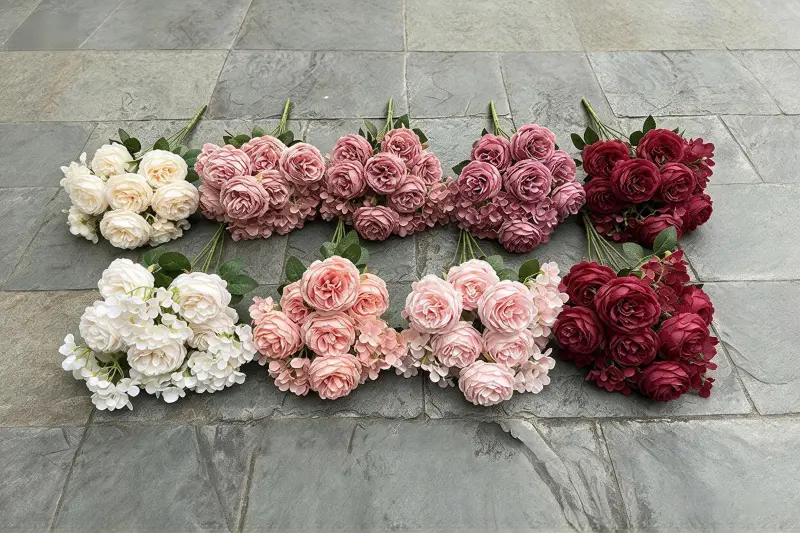
The math that matters: a bundle kit of 8–12 giant flowers costs $350–$600 to build and rents for $250–$500 per weekend. After 2–3 rentals, the asset has paid for itself — every booking after that is pure margin (Amazing Giant Flowers, 2026).
Christmas, Halloween, Valentine: Demand Differences & Stock Strategy
Each holiday rents differently. Smart stock planning starts with knowing which walls earn on which calendar windows (industry data + Xibo Floral rental fleet data):
| Holiday | Booking Window | Top Wall Styles | Color Palette | Average Rental |
|---|---|---|---|---|
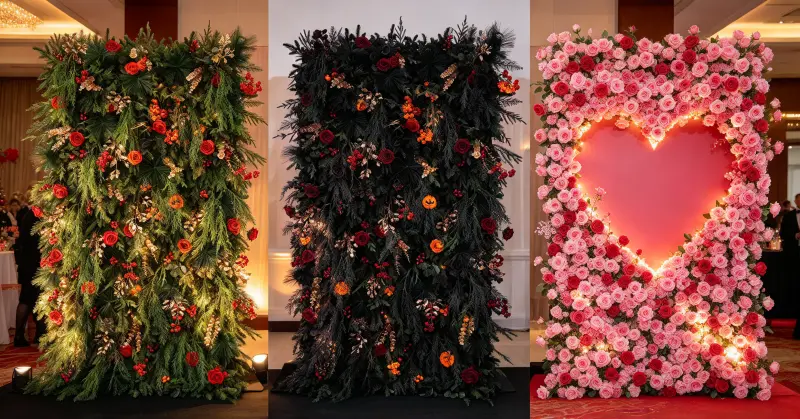
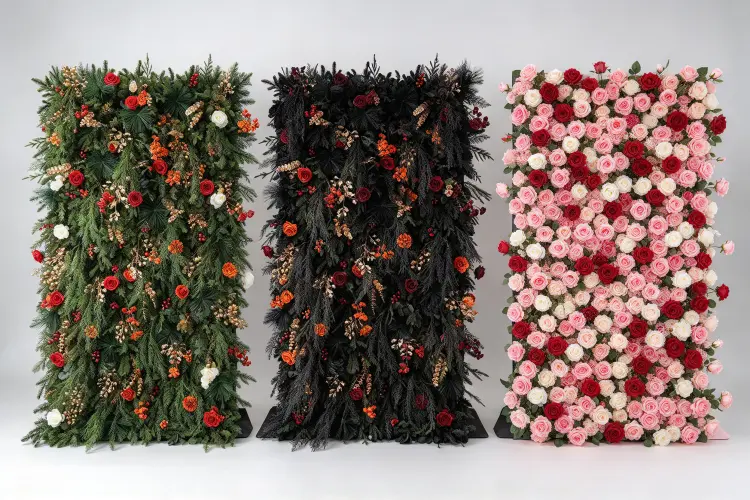
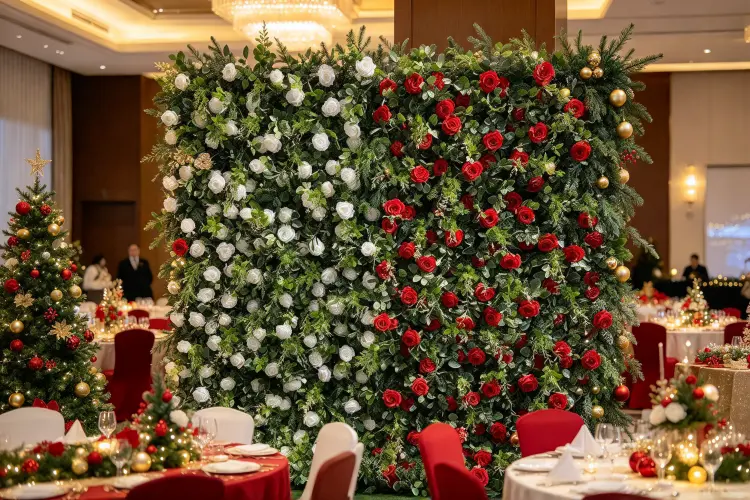
| Christmas | Nov 1 – Dec 24 (6–8 week peak) | Pine & evergreen walls, red/white rose walls, photo-op backdrops for parties & corporate events | Deep green, red, white, gold | $250–$600 |
| Halloween | Oct 1 – Oct 31 (peak in last 2 weeks) | Dark moody walls, black rose walls, spider-web flower walls for parties & brand activations | Black, deep burgundy, orange, purple | $200–$500 |
| Valentine's Day | Jan 20 – Feb 14 (4-week peak) | Red & pink rose walls, heart-shaped installations, proposal & date-night backdrops | Red, pink, white, burgundy | $250–$600 |
Source: Amazing Giant Flowers holiday campaign data (2026), Xibo Floral rental fleet data, industry pricing surveys.
Stock priority for new businesses: start with the two highest-ROI styles — a red/white Christmas wall and a red/pink Valentine wall. Both use overlapping colors (red, white), share transport and storage, and together cover the two longest booking windows of the year. Add a black or deep-burgundy Halloween wall in year two.
Cross-Holiday Reuse: One Wall, 3–4 Seasonal Uses
The biggest mistake new rental businesses make is buying separate inventory for every holiday. With smart palette planning, one wall works across multiple seasons (Amazing Giant Flowers, 2026):
| Palette | Christmas | Valentine's Day | Halloween | Weddings / Other |
|---|---|---|---|---|
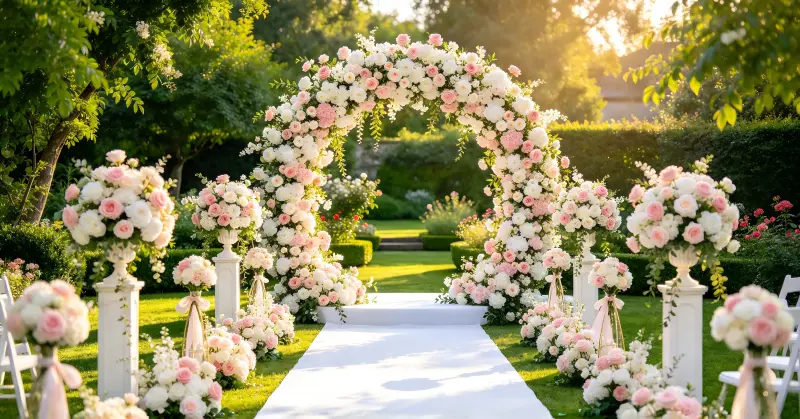
| Ivory, champagne, white | Yes — snowy elegance | Yes — soft romance | No | Yes — weddings, Easter |
| Red, burgundy, white | Yes — classic Christmas | Yes — Valentine red | Yes — dark accents | Yes — winter weddings |
| Deep burgundy, black | Yes — moody festive | Yes — dark romance | Yes — perfect match | Yes — gothic weddings |
Source: Amazing Giant Flowers holiday reuse guide (2026), Xibo Floral product line data.
Rule of thumb: a neutral + red/burgundy palette gives you 3–4 seasonal uses from a single set of walls. Plan the palette at purchase time — a red/white wall ordered for Christmas is a Valentine wall three weeks later with zero new inventory.
Pricing Models & Revenue Math (3–5x Rule)
Holiday flower wall pricing follows a simple, proven formula: price each rental at 3–5x the inventory cost of the setup for a single-day rental, then adjust for your market (Amazing Giant Flowers, 2026).
| Setup Type | Inventory Cost | 3–5x Rental Price | Bookings to Break Even |
|---|---|---|---|
| Single wall (4x8 ft, silk blend) | $200–$350 | $600–$1,000 (per event) | 1–2 bookings |
| Giant flower bundle (8–12 stems) | $350–$600 | $250–$500 (per weekend) | 2–3 bookings |
| Full holiday backdrop package | $800–$1,500 | $1,500–$3,000 (per event) | 2–3 bookings |
Source: Amazing Giant Flowers pricing framework (2026), Xibo Floral factory pricing data.
Revenue math for a 10-wall business: at an average $400 per rental and 8 holiday-weeks of peak booking per year, one wall earns $3,200/year. Ten walls = $32,000/year against a one-time inventory investment of roughly $10,000–$15,000. That's the 20–30% net margin story (TricksBiz, 2026).
Pricing rules that protect margins: ① include setup, transport, and breakdown in every quote — never price inventory alone; ② charge a holiday premium during the 6–8 week peak window; ③ require a deposit at booking (date-locked events don't reschedule — hold the slot with a deposit); ④ offer a lower rate for multi-day corporate contracts to fill weekday capacity.
The Holiday-Ready Sourcing Checklist
Buying holiday walls is different from buying wedding walls — they face harsher venues, more transport cycles, and seasonal storage. Every wall in your holiday fleet should pass this checklist before you order (Sinosources 2026 buyer's guide; Xibo Floral factory QC):
- Fire-retardant certification. Christmas corporate venues and brand activations require fire-rated materials for indoor use. No certification, no booking — confirm the certificate in writing before ordering.
- UV-stabilized pigments. Storefront displays and outdoor holiday events kill non-UV-stabilized walls in one season. UV-stabilized silk holds color across multiple holidays.
- Density for photo quality. Holiday rentals are booked for photos. Walls at 25–35 flowers per square meter hold up in every frame; under 15 fpsm reads cheap in Christmas-party photography.
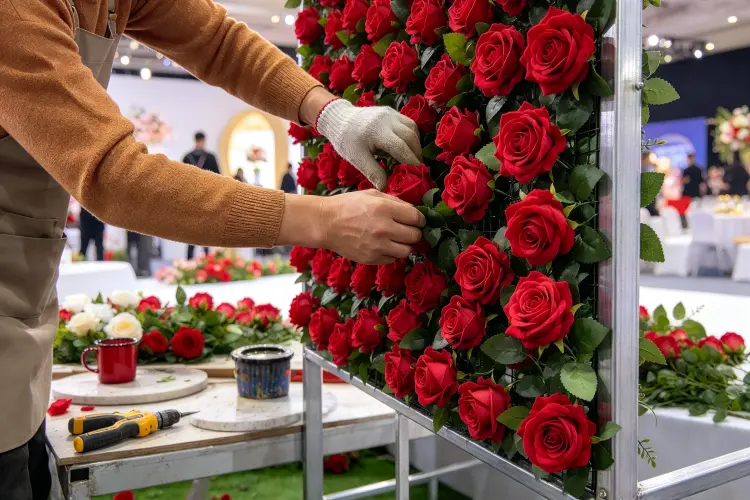
- Metal or fabric backing. Cardboard-backed panels collapse under repeated transport cycles. Holiday walls move 3–4× more than wedding walls — the frame decides whether the asset survives year two.
- Wire-stem fixed petals. Glue-only stems shed petals on every move. Wire-fixed petals survive the Christmas-to-Valentine transition and arrive show-ready.
- Easy-clean materials. High-end persistent florals with anti-fade, anti-deform, easy-clean properties are the fastest-growing segment of the market (China Christmas craft-flower market report, 2026) — buyers now pay for washability, not just beauty.
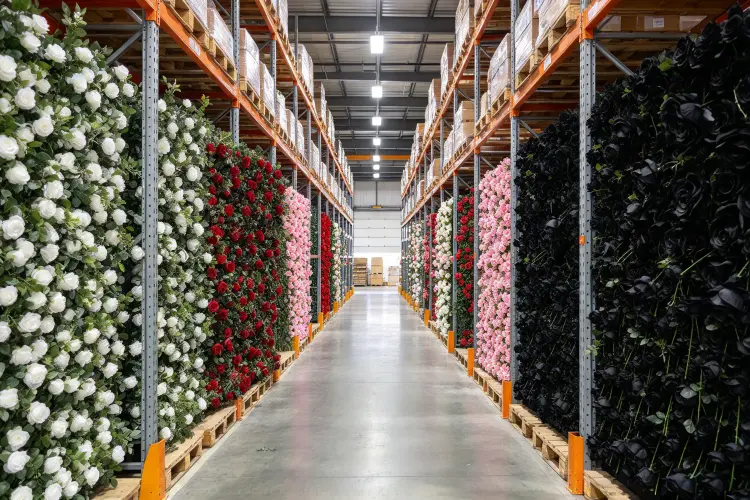
Factory-direct advantage: ordering from a manufacturer like Xibo Floral (4000 m² China factory) cuts retail markups by 30–50%, lets you specify fire-rated and UV-stabilized options in the same order, and keeps spare panels and repair stock at cost.
5 Holiday Decor Rental Mistakes That Kill Margins
Mistake 1: Buying separate inventory for every holiday
Five walls for five holidays = five times the storage, transport, and idle capital. A neutral + red/burgundy palette covers Christmas, Valentine's, Halloween, and weddings with one fleet. Plan the palette at purchase, not per holiday.
Mistake 2: Skipping fire rating and UV stabilization
Christmas corporate venues require fire-rated materials; storefront displays kill non-UV walls in a season. Skipping these "extras" silently removes your two biggest holiday revenue channels: corporate events and outdoor displays.
Mistake 3: Pricing inventory instead of the full service
Quoting $150 for a wall that costs $120 to transport and install destroys margin. Price the complete service — setup, transport, breakdown — at 3–5x inventory cost, and charge holiday premiums during peak windows.
Mistake 4: Starting promotion after the holiday rush begins
Peak booking windows are 6–8 weeks before each holiday. Businesses that start promoting in November miss November's bookings. Launch Christmas campaigns in early September, Valentine campaigns right after New Year, Halloween in early August.
Mistake 5: Buying cardboard-backed or glue-only walls to save money
Holiday walls move 3–4× more than wedding walls. Cardboard collapses under transport, glue-only stems shed petals, and each failure costs you a review — and the next booking. Metal frames and wire-fixed petals are non-negotiable for rental fleets.
FAQ
Factory-Direct Holiday Flower Walls
Fire-retardant and UV-stabilized options, dense 25–35 fpsm silk, metal modular frames. Neutral and red/burgundy palettes built for 3–4 seasonal uses. Factory-direct at 30–50% below retail.
Request a Free Sample