- UV Resistant vs. Fire Retardant: What These Labels Actually Mean
- Fire Retardant Standards: The Complete Global Reference
- UV Testing Standards: Hours, Delta E, and What They Mean
- When Commercial Projects Require Fire-Rated Artificial Flowers
- 6 Documents You Must Demand from Every Supplier
- How to Verify Test Reports Are Real (Not Photoshop)
- Dual Certification: Cost vs. Commercial Value
- 5 Costly Sourcing Mistakes
- FAQ
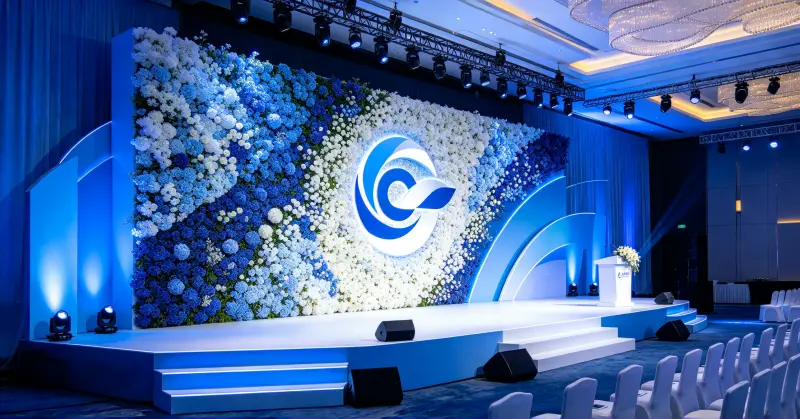
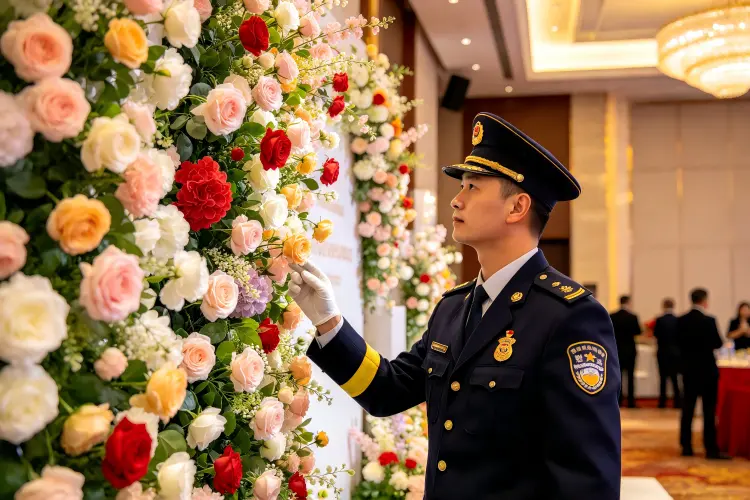
Here's the scenario that ends rental company careers: you deliver a $5,000 flower wall setup for a corporate gala at a downtown hotel. The fire marshal shows up 90 minutes before guest arrival, asks for the flame retardant certificate, and you don't have one. You have a supplier email that says "fire retardant treated." That's not a certificate. The marshal orders the wall removed. The event planner is furious. You lose the client, the deposit, and your reputation in that market. I've seen this happen three times to our clients.
The problem isn't that artificial flowers are dangerous. The problem is that "fire retardant" and "UV resistant" have become marketing labels with zero regulatory meaning. A supplier can spray any chemical on any flower and call it fire retardant. A supplier can add any amount of UV stabilizer and call it UV resistant. Without a third-party test report specifying the exact standard, test method, material, and date, those words are worthless in a commercial setting.
This guide is for commercial buyers — rental companies, event planners, hotel procurement teams, and retail decorators who need artificial flowers that pass inspection and last. We'll break down every standard you need to know, exactly what documents to demand, and how to tell a real test report from a fabricated one. Based on our experience supplying commercial projects and the fire code requirements we've navigated across North America, Europe, and the Middle East.
UV Resistant vs. Fire Retardant: What These Labels Actually Mean
Let's start with the two most misunderstood terms in the industry.
"UV resistant" is not a certification. It's a descriptive claim. It means the manufacturer added some amount of UV stabilizer to the material. It does not tell you how much stabilizer, what test method was used, how many hours of UV exposure the material withstood, or how much color fading occurred. A product with 0.1% UV stabilizer and a product with 3% UV stabilizer can both legally be called "UV resistant." The difference in outdoor lifespan? 6 months vs. 5 years.
"Fire retardant" is also not a certification. It means the material will self-extinguish when the flame source is removed. It does NOT mean fireproof — no artificial flower is truly fireproof. It does not tell you which standard was tested, which method was used, or whether the test was conducted on the exact material you're buying. A supplier can test one material and apply the "fire retardant" label to a completely different material.
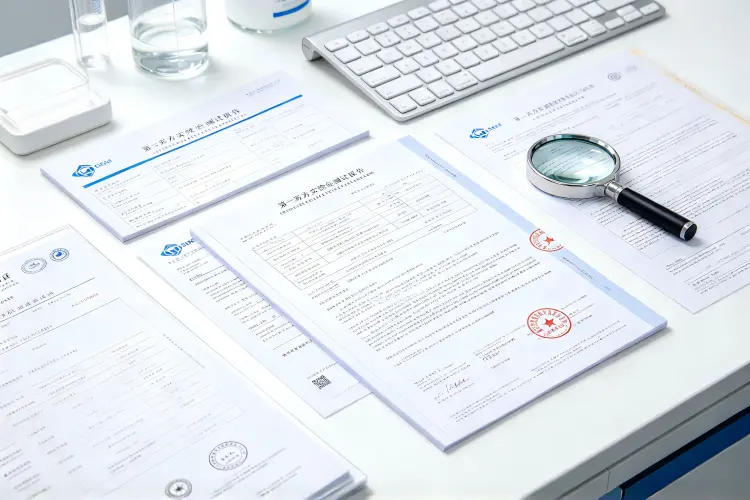
The only thing that matters in commercial procurement is the test report. Not the label, not the supplier's claim, not the product description. A third-party laboratory test report from a recognized lab (SGS, Intertek, Bureau Veritas, TÜV) that specifies the exact standard, method, material tested, test date, and result. Everything else is marketing.
Fire Retardant Standards: The Complete Global Reference
Different countries and regions use different fire standards. If you're selling internationally or supplying projects in multiple markets, you need to know which standard applies where.
| Standard | Region | What It Tests | Common Requirement Level |
|---|---|---|---|
| NFPA 701 Method 1 | United States | Vertical flame propagation for small specimens (single layer fabrics) | Most common for event decor, curtains, drapes |
| NFPA 701 Method 2 | United States | Flame propagation for large/flat specimens (multi-layer, vinyl-coated, artificial foliage) | Required for artificial greenery and flower walls per 2024 IFC |
| ASTM E84 Class A | United States | Flame spread index and smoke development for interior finishes | Highest rating; required for walls/ceilings in assembly occupancies |
| CA Title 19 / State Fire Marshal | California, USA | Flame resistance for decorative materials used in public buildings | Mandatory for CA hotels, restaurants, casinos, event venues |
| BS 5867 Part 2 Type B | United Kingdom | Flame resistance of fabrics for curtains and drapes | Required for UK commercial venues and event spaces |
| EN 13501-1 | European Union | Reaction to fire classification for construction products (A1, A2, B, C, D, E, F) | Class B or C required for commercial interiors |
| DIN 4102-1 B1 | Germany / Central Europe | Flame resistance of building materials (B1 = difficult to ignite) | Required for public buildings in Germany, Austria, Switzerland |
| GB 20286 Class 1 | China | Flame retardant performance of textiles in public places | Required for commercial venues in mainland China |
Source: NFPA 701:2023 standard, 2024 International Fire Code (IFC), Union Chance sourcing guide (2026), Edmund Bell flame retardant standards guide (2026), Botanicblossoms certification guide (2025), Xibo Floral commercial project experience.
Critical note for artificial flower walls: The 2024 International Fire Code explicitly states that artificial decorative vegetation must meet NFPA 701 Test Method 2 (not Method 1), because Method 2 is designed for multi-layer, vinyl-coated, and flat specimens — which describes flower wall panels. If your supplier only provides an NFPA 701 Method 1 report, it may not satisfy the code inspector for a flower wall installation (Botanicblossoms, 2025).
When in doubt, specify both NFPA 701 and ASTM E84. Some manufacturers test to multiple standards, and having documentation for both covers you regardless of how the Authority Having Jurisdiction (AHJ) classifies the installation (Lonestar Fauxscapes, 2026).
UV Testing Standards: Hours, Delta E, and What They Mean
UV testing is more straightforward than fire testing, but there are still critical details most buyers miss.
The Two Main UV Test Methods
ASTM G154 (U.S.) / ISO 4892-3 (International): Fluorescent UV lamp accelerated weathering. Simulates outdoor UV exposure using fluorescent UV lamps, moisture cycles, and elevated temperatures. This is the most common test for artificial flowers and foliage.
ASTM G155 / ISO 4892-2: Xenon arc lamp weathering. Simulates full-spectrum sunlight including visible and infrared. More comprehensive but more expensive. Used for high-end commercial projects.
| UV Test Hours | Approx. Real-World Outdoor Equivalent | Commercial Grade? | Typical Use Case |
|---|---|---|---|
| 500 hours | 3–6 months | No — consumer grade | Indoor use, occasional outdoor events |
| 1,000 hours | 6–12 months | Minimum for light outdoor | Seasonal outdoor displays, patio decor |
| 2,000 hours | 1–2 years | Yes — standard commercial | Rental companies with regular outdoor events |
| 3,000 hours | 2–3 years | Yes — premium commercial | Permanent outdoor installations, high-UV regions |
| 5,000 hours | 3–5+ years | Yes — top tier | Permanent outdoor in extreme UV (Arizona, Middle East, Australia) |
Source: ASTM G154 standard, Union Chance UV testing guide (2026), LifeTips outdoor artificial plants guide (2026), artificialflowerplant.com fade testing explanation (2026). Real-world equivalents are estimates and vary by geographic UV index, mounting orientation, and maintenance.
Delta E: the number that actually matters. UV test reports measure color change using the Delta E (ΔE) scale. Delta E < 1 = invisible to the human eye. Delta E 1–2 = barely perceptible to experts. Delta E 2–3 = noticeable to careful observers. Delta E > 3 = obvious to anyone. For commercial artificial flowers, require Delta E ≤ 3.0 after the stated test hours. Premium products achieve Delta E ≤ 1.5 (Sourcify China, 2025; CloudSpects QC guide, 2026).
The dark green problem: Dark green leaves are the most UV-sensitive color. Without adequate UV stabilizer, dark green fades to an unnatural yellow-green in weeks — customers instantly reject this. If you're buying greenery-heavy products, pay extra attention to the green color's Delta E rating specifically, not just the overall product rating (CloudSpects, 2026).
When Commercial Projects Require Fire-Rated Artificial Flowers
Not every project needs fire-rated artificial flowers. But if you're in any of these categories, you absolutely do — and skipping it is an expensive risk.
| Project Type | Fire Rating Typically Required | Who Enforces | Risk of Non-Compliance |
|---|---|---|---|
| Hotels & hospitality | NFPA 701 + ASTM E84 Class A | Hotel risk management, local fire marshal | Setup rejected, contract termination, liability |
| Shopping malls & retail | NFPA 701 Method 2, local building code | Mall management, fire inspector | Fines, forced removal, lease violation |
| Event venues & assembly spaces | NFPA 701, CA Title 19 (if CA) | Venue management, fire marshal on-site | Setup removed before event, client loss |
| Corporate offices & lobbies | ASTM E84 Class A or B | Building management, fire inspector | Building code violation, removal order |
| Restaurants & bars | NFPA 701, local fire code | Health/fire inspector, insurance | Insurance void, fines, closure |
| Rental company inventory | Depends on venue (carry both rated and non-rated) | Venue requirements per event | Lost bookings at compliant venues |
| Private residences | Usually not required | None (homeowner discretion) | Personal safety risk only |
Source: 2024 International Fire Code, Lonestar Fauxscapes fire ratings guide (2026), Silks Are Forever fire code explanation (2026), Califauxscapes NFPA 701 guide (2026), Botanicblossoms commercial project guide (2026).
The pattern is clear: any space open to the public requires fire-rated decor. Assembly occupancies — restaurants, event venues, hotels — face the most stringent requirements because they have large numbers of people in enclosed spaces. The Authority Having Jurisdiction (AHJ) — usually the local fire marshal — has final discretion and can require removal on the spot if documentation isn't available (Lonestar Fauxscapes, 2026).
Commercial-Grade Artificial Flowers with Full Certification
Our flower walls and floral panels are tested to NFPA 701 Method 2 (SGS certified) and ASTM G154 2,000+ hours UV resistance. Full test reports available before order. Factory-direct pricing, MOQ 10 panels, 7–10 day shipping. Built for commercial projects that must pass inspection.
Request Test Reports & Commercial Pricing6 Documents You Must Demand from Every Supplier
If a supplier can't provide all six of these, walk away. These are non-negotiable for commercial procurement.
1. Fire Test Report (Third-Party Laboratory)
Must be from SGS, Intertek, Bureau Veritas, TÜV, or equivalent. Must specify: exact standard (NFPA 701 Method 2, not just "NFPA 701"), test method, material tested (must match the product you're buying), test date (within 24 months), and pass/fail result. A supplier's in-house test or a "certificate of compliance" letter is not acceptable.
2. UV Test Report (Third-Party Laboratory)
Must specify: test standard (ASTM G154 or ISO 4892-3), test duration in hours, Delta E result for each color, and material tested. Require minimum 2,000 hours with Delta E ≤ 3.0 for commercial use. A claim of "UV resistant" with no test report is meaningless.
3. Material Safety Data Sheet (MSDS / SDS)
Confirms the materials used are non-toxic and safe for indoor commercial environments. Required by many hotel and corporate procurement departments. Should list all chemical components including flame retardant treatments and UV stabilizers.
4. Product Specification Sheet
Must list: exact material composition (PE, polyester, PVC, silk), flower density per panel, panel dimensions, frame material, backing material, weight, and color options. This ensures you know exactly what you're buying and can verify it matches the test report.
5. Batch Consistency Guarantee
Commercial projects often require reorders months or years later. The supplier must guarantee that reorders match the original batch in color, material, and specifications. Without this, your expansion panels won't match your existing installation.
6. Fire Retardant Treatment Durability Statement
Fire retardant treatments can be topical (sprayed on) or inherent (mixed into material). Topical treatments wash off and wear off over time. The supplier must state which method is used and the expected durability. For commercial rental use, require inherent flame retardant (IFR) material — the protection lasts the life of the product.
How to Verify Test Reports Are Real (Not Photoshop)
Unfortunately, some suppliers fabricate test reports. Here's how to protect yourself:
Check the lab's report number. Every legitimate test report has a unique report number. Contact the issuing laboratory directly (using their official website phone number, not the number on the report) and verify the report number exists and matches the product described.
Check the test date. Fire and UV test reports are typically valid for 24 months. If the report is older than 2 years, request a retest. Materials and formulations change — a 5-year-old report may not reflect current production.
Check the material description. The report must describe the exact material you're buying. If the report says "polyester fabric" but you're buying "PE plastic flowers," the report doesn't apply. This is the most common trick — testing one cheap material and applying the report to a different product.
Request a sample and burn-test it yourself. This sounds dramatic, but it's the ultimate verification. Take a small piece of the sample, hold a lighter to it for 3 seconds, then remove the flame. If it self-extinguishes within 2 seconds and doesn't drip flaming material, it passes the basic flame retardant check. If it continues to burn or drips, the report is fake or the material doesn't match. Do this in a safe area with water nearby.
Check for lab security features. SGS, Intertek, and other major labs use watermarks, holograms, QR codes, and digital verification on their reports. A plain PDF with no security features is suspicious.
Dual Certification: Cost vs. Commercial Value
Fire-retardant, UV-stabilized artificial flowers cost more. The question is whether the premium is worth it for your business.
| Factor | Standard Grade (No Cert) | Commercial Grade (FR + UV) | Difference |
|---|---|---|---|
| Cost per panel (40×60cm) | $12–$20 | $20–$35 | +60–75% |
| Indoor lifespan | 5–8 years | 5–8 years | Same (indoor) |
| Outdoor lifespan | 6–12 months | 2–5 years | 2–5x longer |
| Commercial venue access | Blocked at compliant venues | Accepted everywhere | Access to 60%+ more venues |
| Rental price premium | Base rate | +20–40% for outdoor/commercial | Higher revenue per event |
| Liability exposure | High — no fire protection | Low — certified and documented | Insurance and legal protection |
| 3-year total cost (outdoor use) | $36–$60 (3 replacements) | $20–$35 (1 purchase) | Commercial is CHEAPER long-term |
Source: Xibo Floral factory pricing data, industry rental rate surveys, Yingsheng Wedding ROI analysis (2026). Cost estimates based on factory-direct wholesale pricing for 40×60cm panels.
The math is clear: for any business doing outdoor events or serving commercial venues, commercial-grade flowers are cheaper over a 3-year period. The upfront premium is offset by longer outdoor lifespan, access to higher-paying venues, and higher rental rates. The only scenario where standard grade makes sense is pure indoor residential use with no commercial venue requirements.
5 Costly Sourcing Mistakes
Mistake 1: Accepting "fire retardant" as a label without a test report
The #1 mistake. "Fire retardant" is not a certification. It's a marketing claim. Always require a third-party test report specifying the exact standard (NFPA 701 Method 2), material, and date. If the supplier hesitates or says "we can provide it after you order," that's a red flag.
Mistake 2: Buying NFPA 701 Method 1 when Method 2 is required
Method 1 is for single-layer fabrics. Method 2 is for multi-layer, vinyl-coated, and flat specimens — which describes flower wall panels. The 2024 IFC requires Method 2 for artificial decorative vegetation. A Method 1 report may not pass inspection for a flower wall.
Mistake 3: Ignoring the Delta E number in UV reports
A supplier says "2000 hours UV tested" but doesn't mention the Delta E result. 2000 hours with Delta E = 8 (severely faded) is worse than 1000 hours with Delta E = 1.5 (barely changed). Always ask for the Delta E number per color. Require ≤ 3.0, prefer ≤ 1.5.
Mistake 4: Not verifying the test material matches your product
A supplier tests a white polyester sample and applies the report to burgundy PE flowers. Different material, different color, different formulation — the report is invalid. Always check that the material description in the report matches the exact product you're purchasing.
Mistake 5: Assuming topical fire retardant spray is permanent
Some suppliers spray a fire retardant coating on finished products. This washes off with rain, wears off with cleaning, and degrades over 6–12 months. For commercial rental use, require Inherent Flame Retardant (IFR) material — the retardant is mixed into the polymer during manufacturing and lasts the life of the product.
FAQ
Source Commercial-Grade Flowers With Full Certification
Stop risking setup rejection and liability. Our artificial flower walls and floral panels are SGS-tested to NFPA 701 Method 2 and ASTM G154 2,000+ hours UV resistance. Full test reports, SDS, and spec sheets available before ordering. Factory-direct pricing, MOQ 10 panels, 7–10 day shipping. Built for commercial projects that must pass inspection.
Browse Commercial-Grade Flower Walls