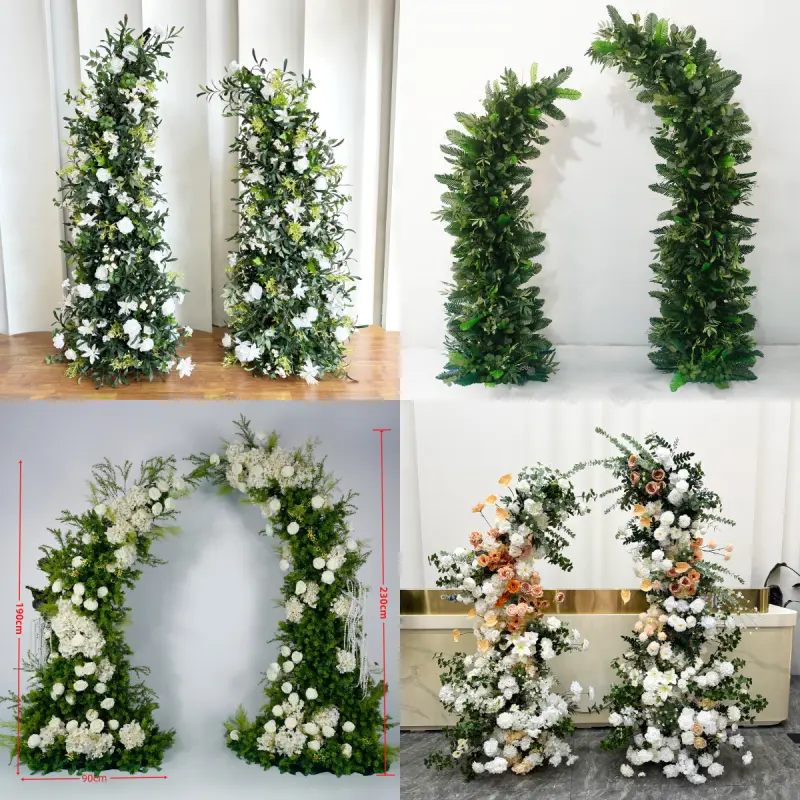
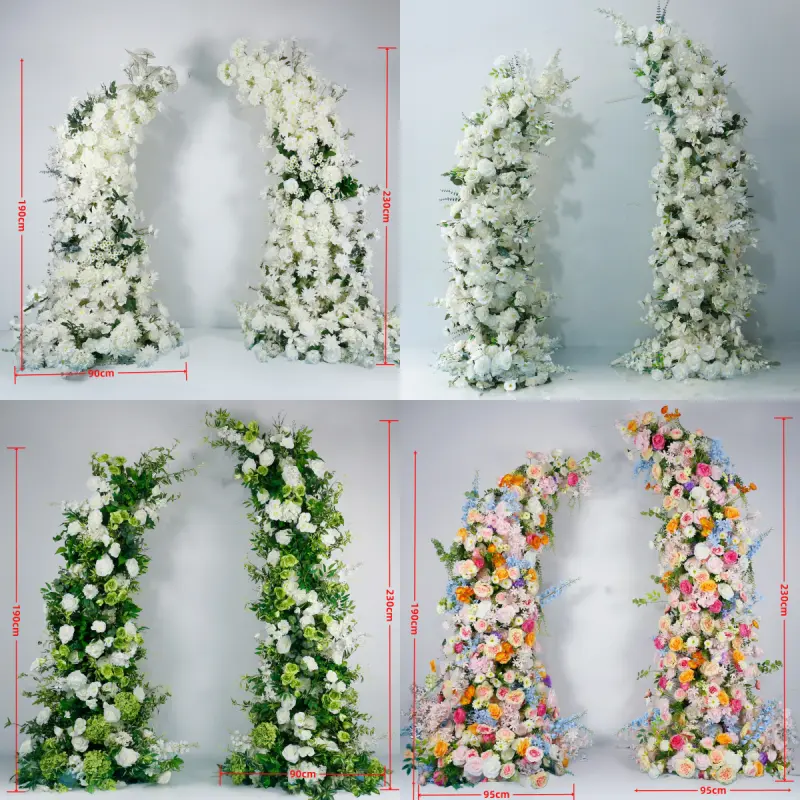
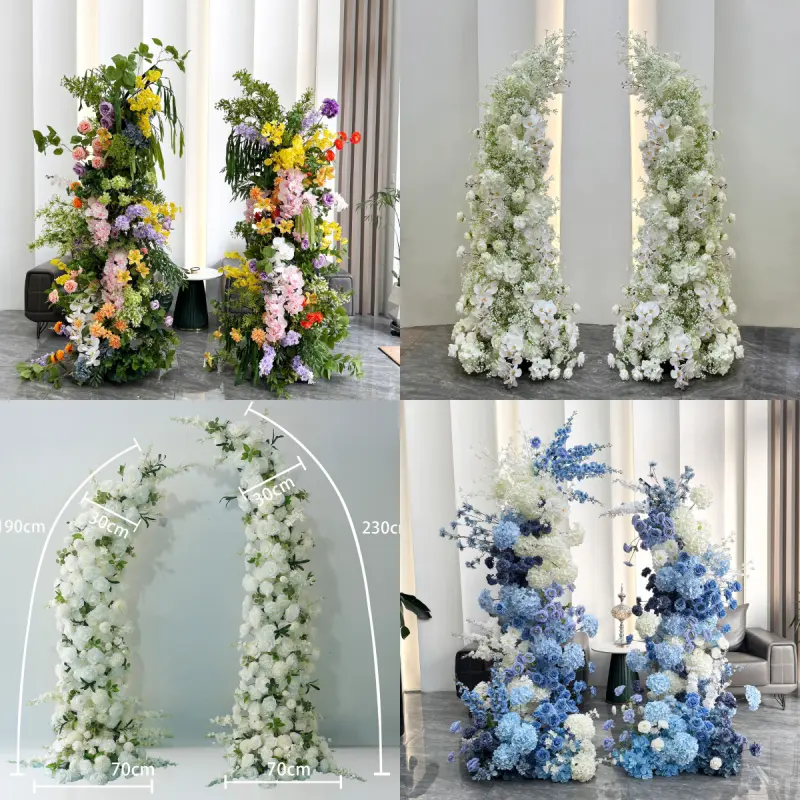
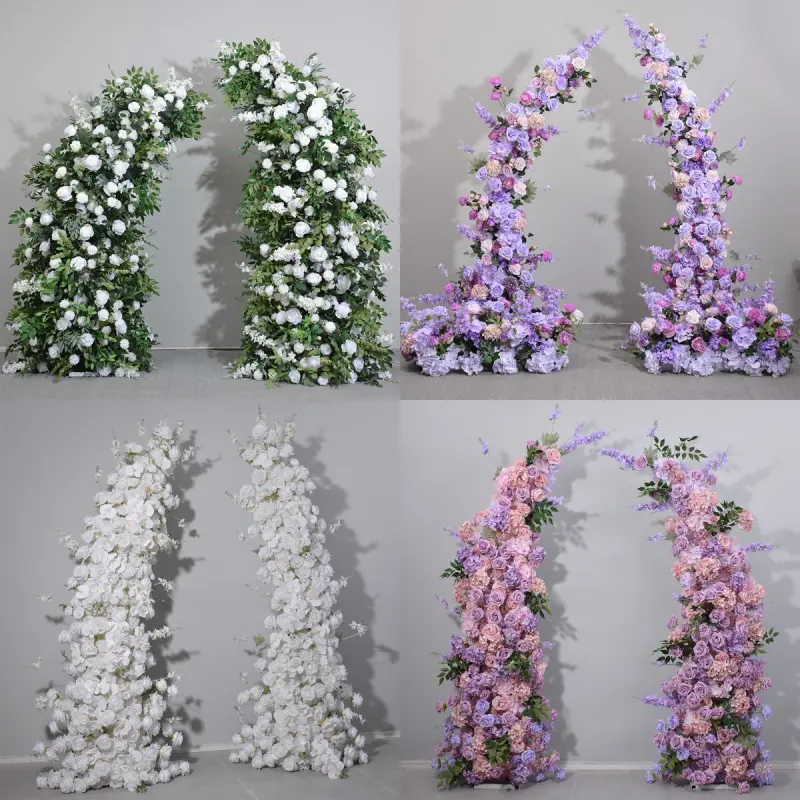
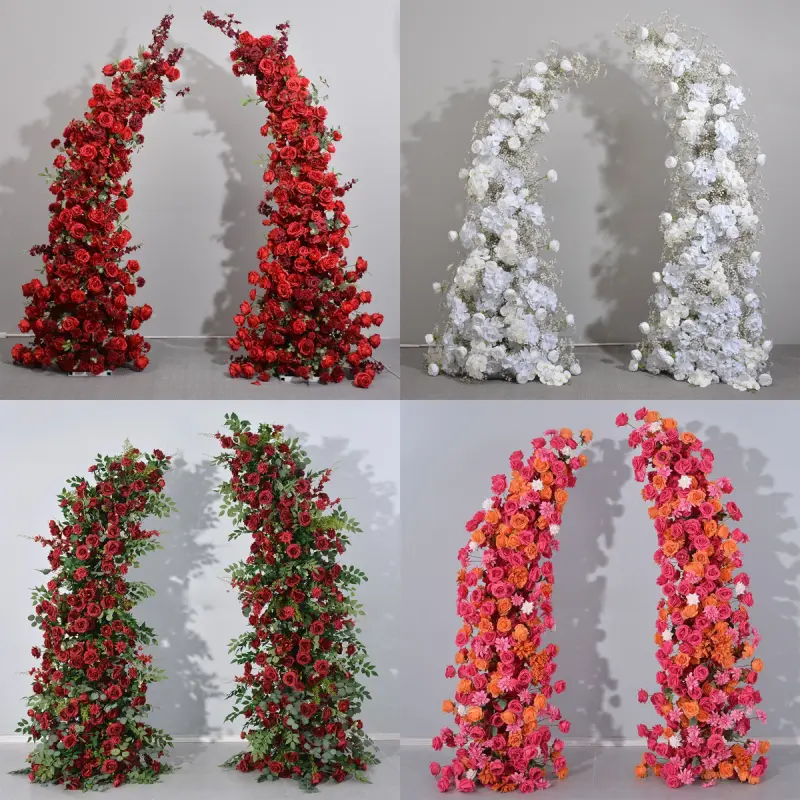
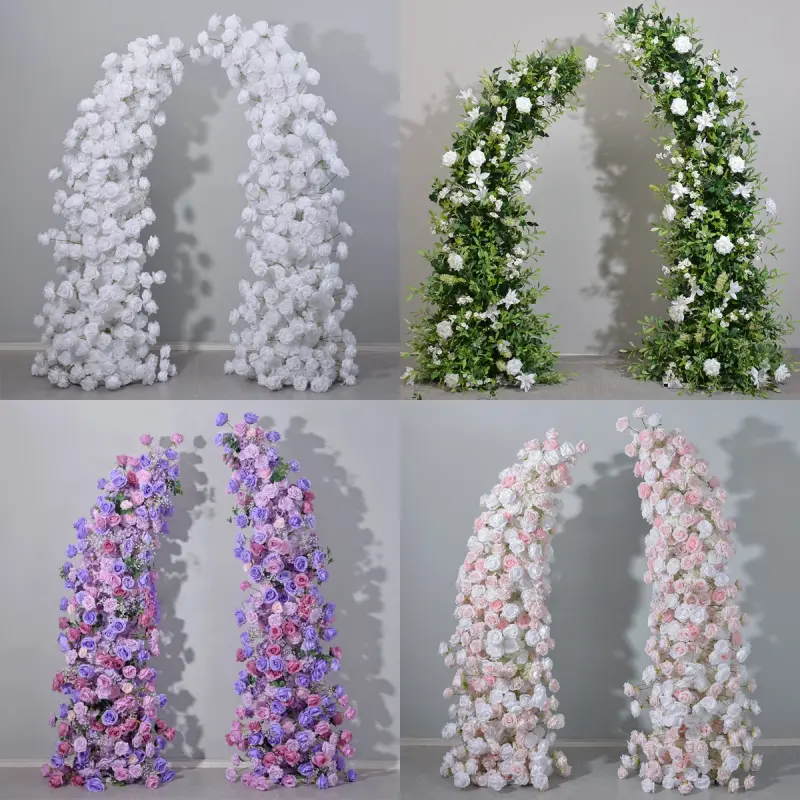
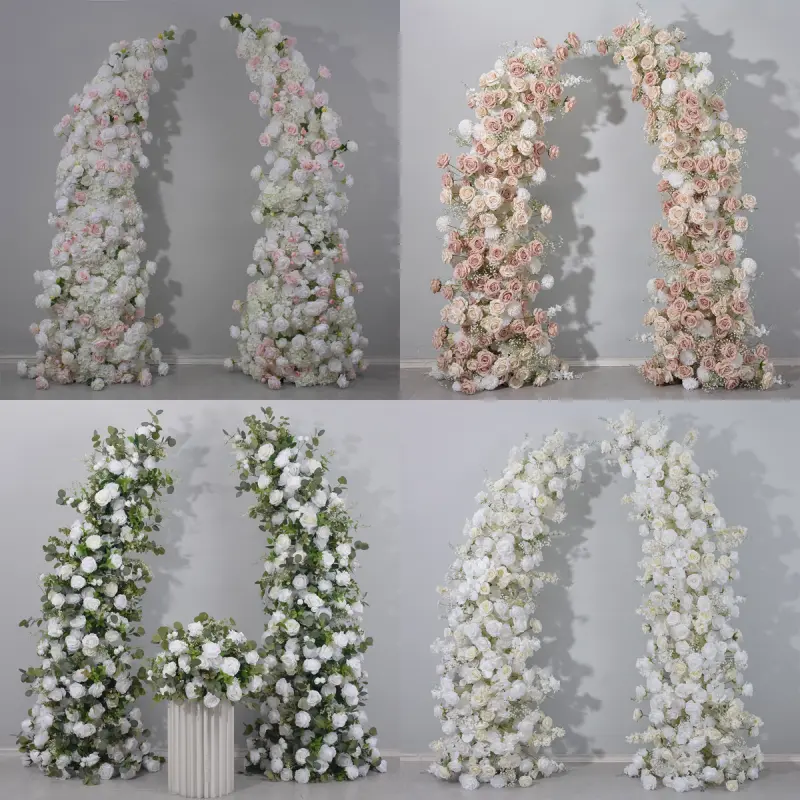
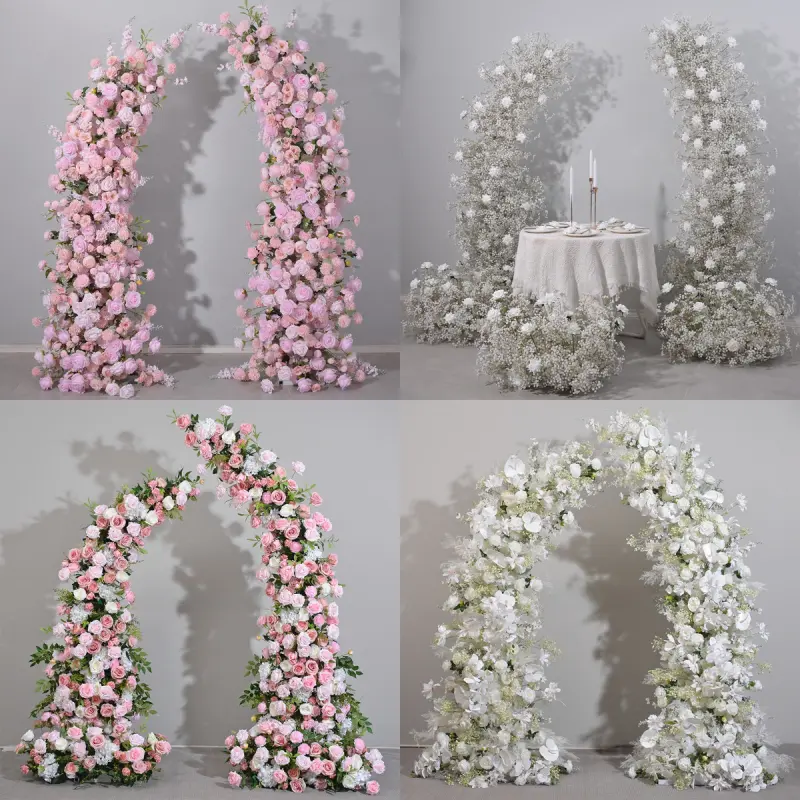
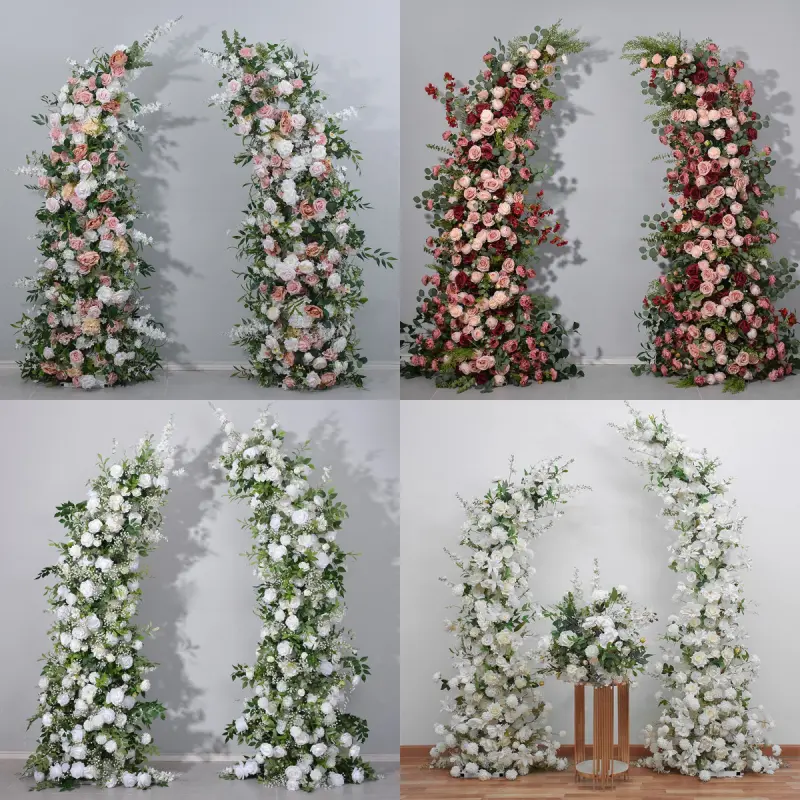
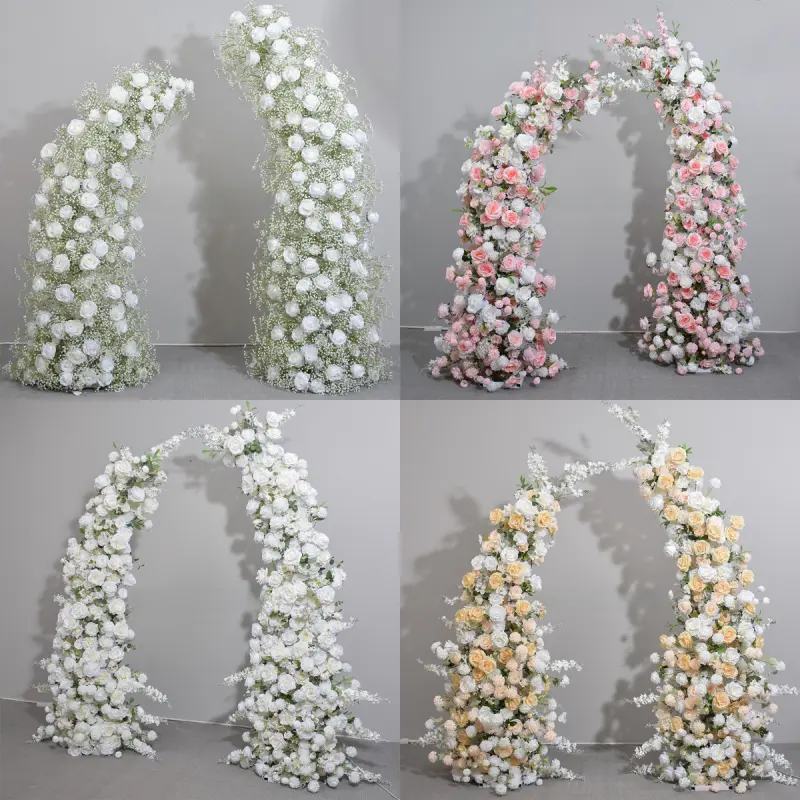
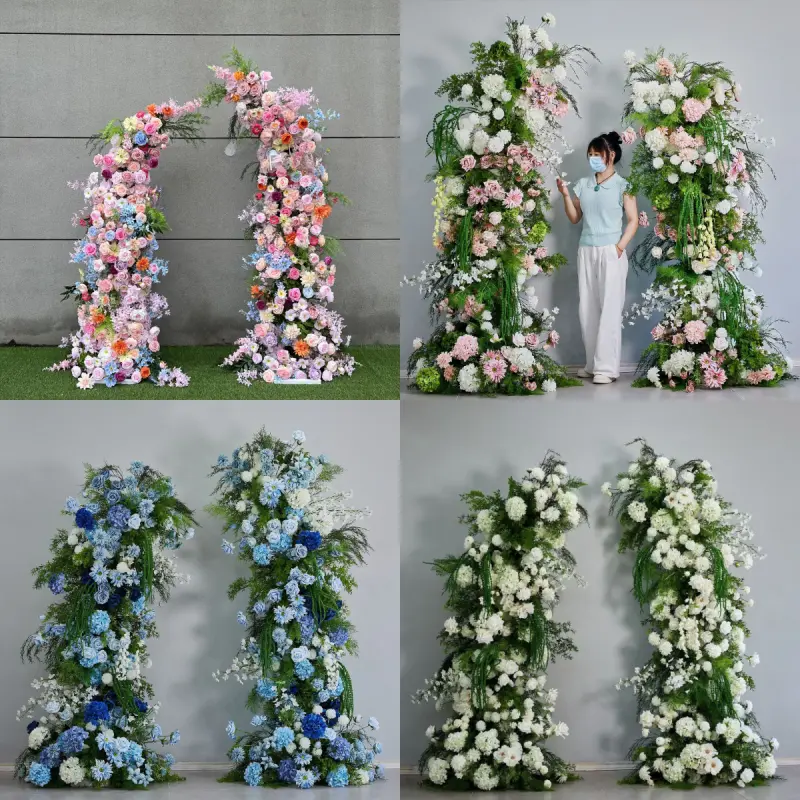
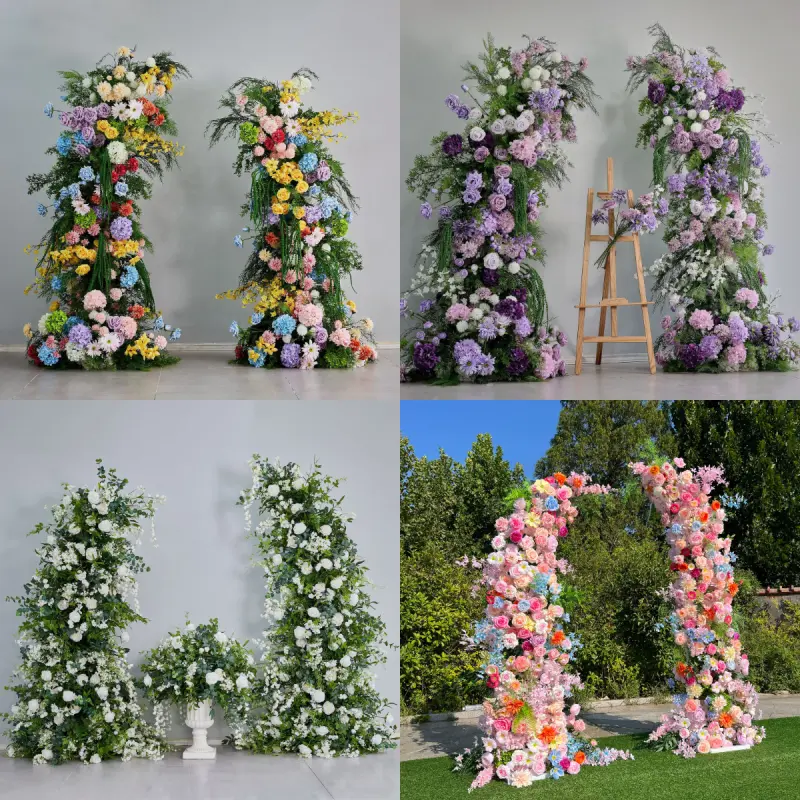
Red Rose Crescent Flower Arch – Moon Gate Wedding Arch
Deep Red Rose Asymmetric Crescent Floral Arch with Green Eucalyptus – Bold Romantic Moon Gate Wedding Arch with Metal Frame Included for Classic, Vintage, and Bold Ceremonies
Red leaves marks. Not just on photos. On fabric. On gloves. On white wedding dresses.
A wedding planner in Los Angeles called me two years ago. She ordered a red crescent arch for a winter wedding. Deep red, she said. Romantic. Bold. We made it. Shipped it. Her team set it up the night before. The next morning, the bride walked past the arch during her first look. Her silk train brushed against the bottom roses. When she turned around, there was a red streak on the white silk. About six inches long. The planner sent me a photo. I still have it.
I felt sick. Not because the arch was wrong – it was beautiful. But because we hadn't thought about what happens when red silk flowers rub against white silk fabric. Red dye transfers. It doesn't matter how good the flower looks under our factory lights. What matters is whether it leaves a mark when someone's $5,000 wedding dress touches it.
We replaced that arch. Overnighted a new one. The planner used it. The wedding went fine. But I kept that photo. And I started asking: how many other red arches had we shipped that left marks on dresses, on tablecloths, on rental venue chairs? We didn't know. Nobody had complained before. Maybe they just didn't reorder.
So we built the rub test. Every batch of red flowers that comes into our factory now gets rubbed against white cotton fabric – fifty times, firm pressure, same motion every time. If the fabric picks up more than a level-3 color transfer, the batch goes back. About 12% of red flower batches fail this test. White? About 2%. Pink? About 5%. Red is 12%. The highest of any color except blue. Red leaves marks.
Sister Li runs our dyeing department. Fourteen years. She says red dye molecules are the second-largest – only blue is bigger. They sit near the surface of the fabric. They don't lock in as deep. Rub them, and they transfer. "Red wants to leave," she says. "You have to make it stay."
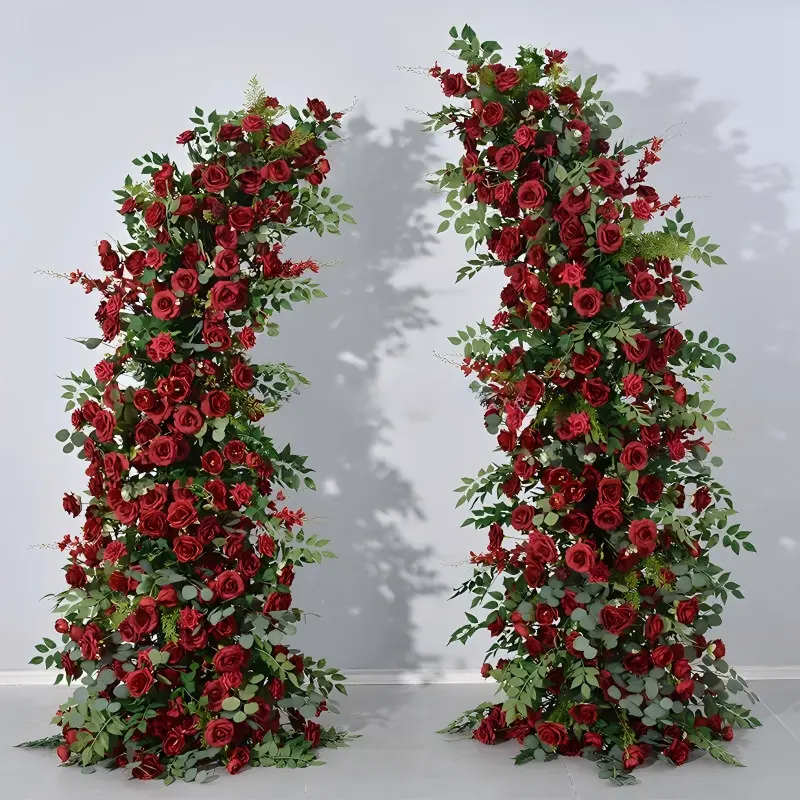
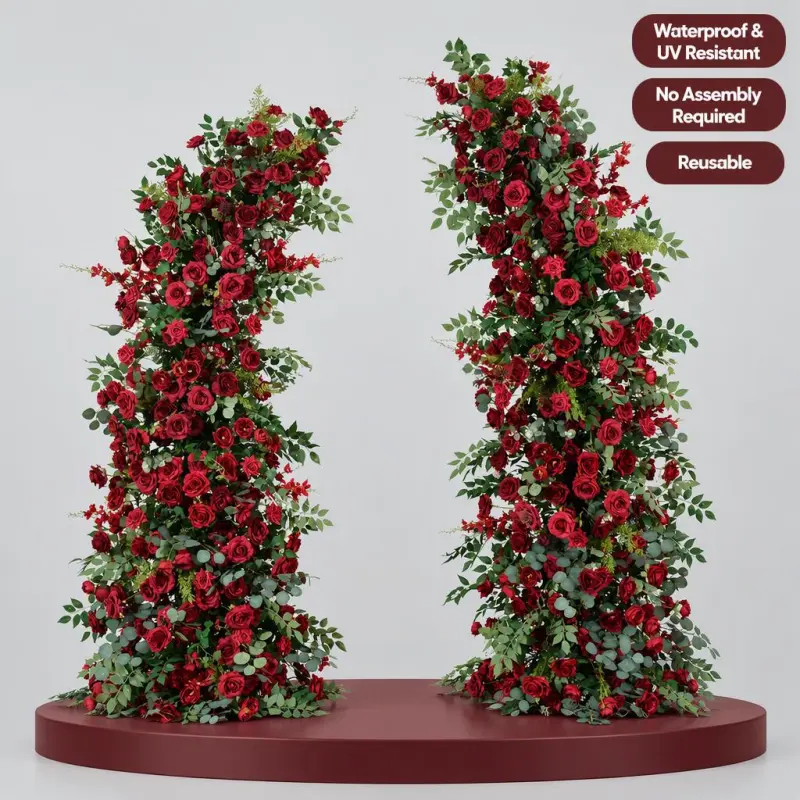
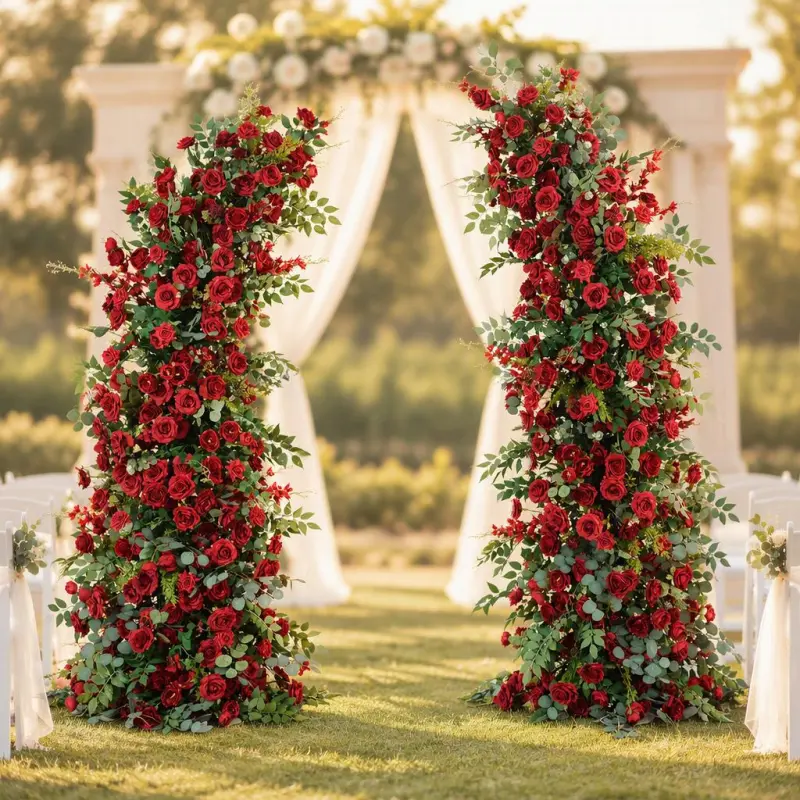
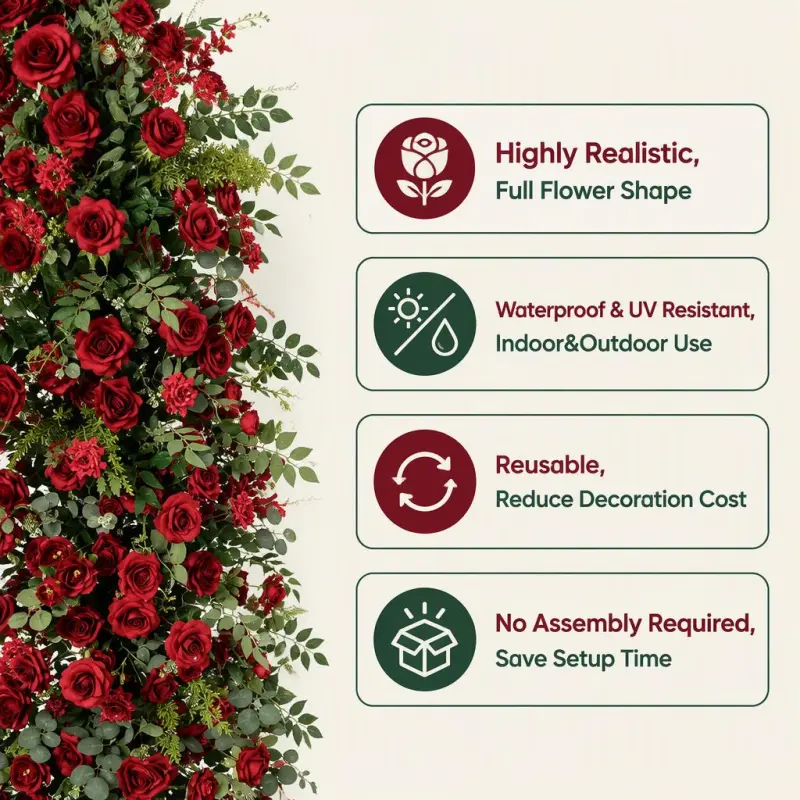
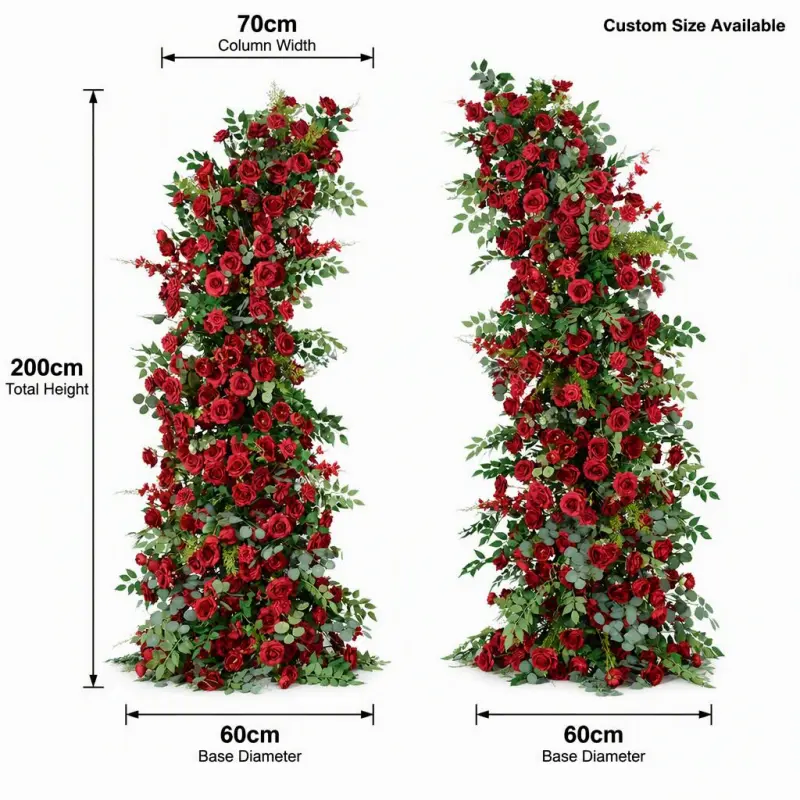
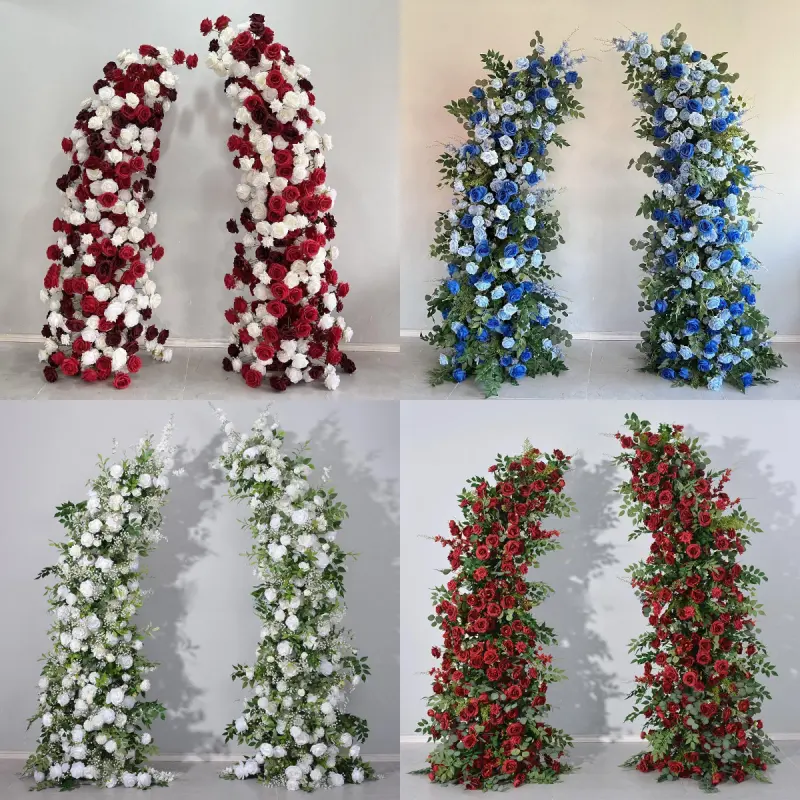
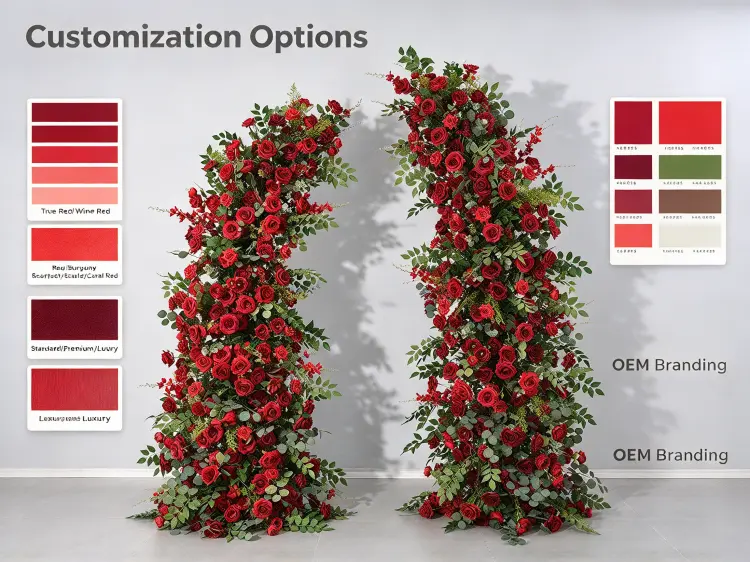
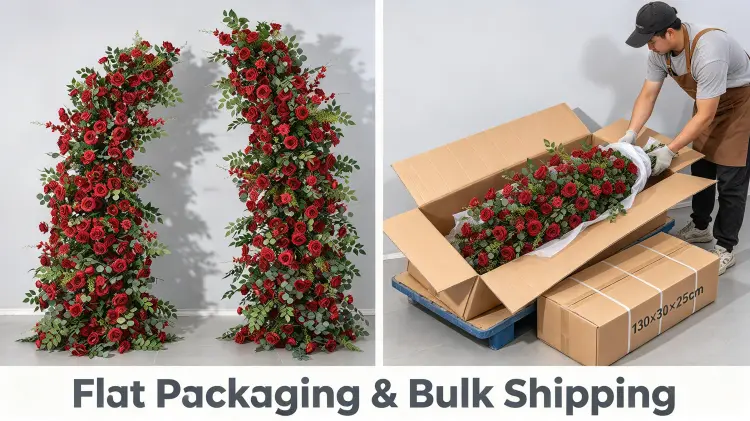
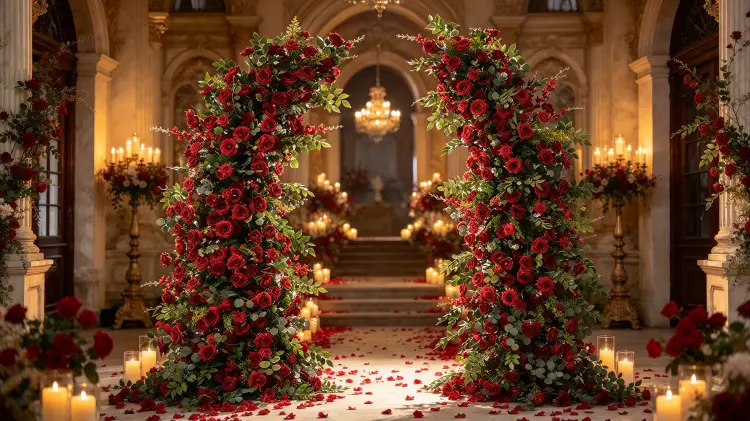
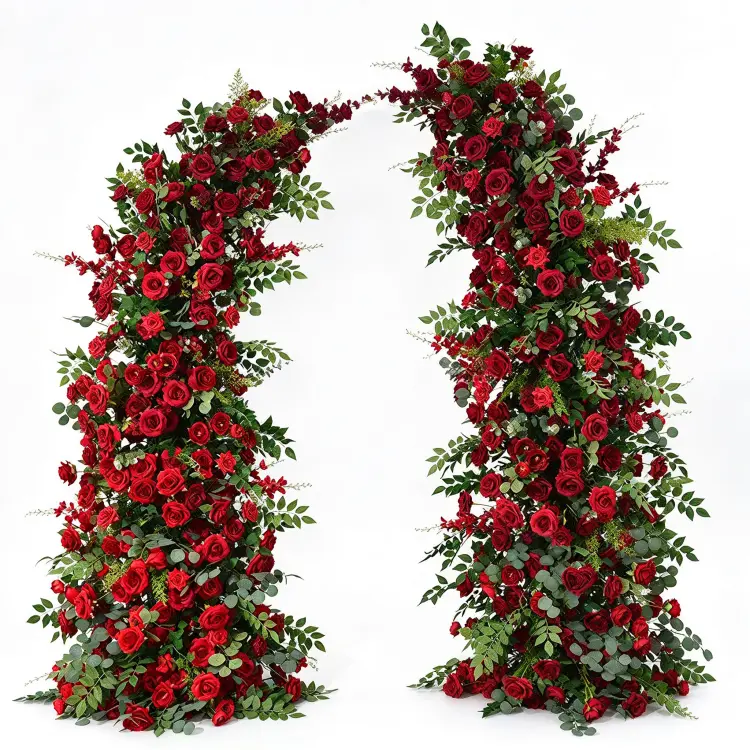
This is our deep red rose crescent arch. Three shades of red – true red at the base, wine red through the curve, deep burgundy at the top. Green eucalyptus leaves woven through for contrast and texture. No white flowers. This arch is unapologetically red. About 70% red, 30% greenery. The eucalyptus isn't decoration – it's structure. It breaks up the red so the arch doesn't read as a flat wall of color. It adds depth. It makes the red pop.
And yes, every red flower on this arch passed the rub test. We test before tying. We test after tying. We spray a color-fixing sealant on the bottom 30cm where dresses are most likely to brush. We wrap red sections in tissue paper for shipping so they don't rub against each other in the box. Red leaves marks. We make sure it doesn't leave them on your client's dress.
Crescent shape. Not U-shaped. The two columns curve inward at the top, leaving an opening. Some people call it a moon gate. Some call it a horn arch. We call it crescent. For deep red, the crescent shape works because the asymmetry creates drama – a symmetric U-arch in all-red can feel like a corporate backdrop. The crescent curve gives the eye somewhere to move. It feels intentional. It feels bold.
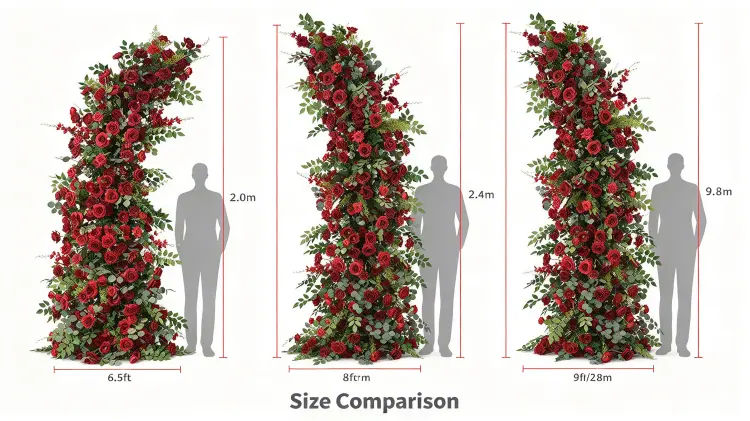
8 feet tall at the highest point. We do 6.5 and 9 too. But 8ft is where the red gradient reads best. At 6.5ft, the three red shades compress. At 9ft, the top burgundy gets lost above eye level. 8ft is the sweet spot for red. I've made enough of these to know. I've also made enough wrong ones to know what wrong looks like. Orange is wrong. Pink is wrong.
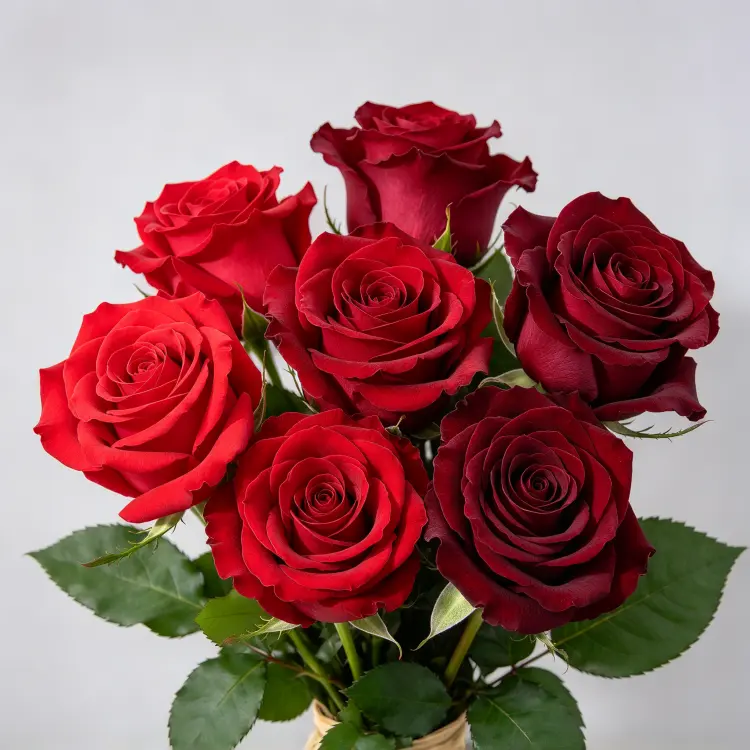
What's on this arch? True red roses – both fully bloomed and buds. Wine red roses – same. Deep burgundy roses – same. Green eucalyptus leaves – for contrast and texture. That's four types. Three shades of red plus greenery. No white. The eucalyptus is critical – a red arch without greenery looks flat, almost artificial in a bad way. With eucalyptus? It looks like a garden that decided to be red.
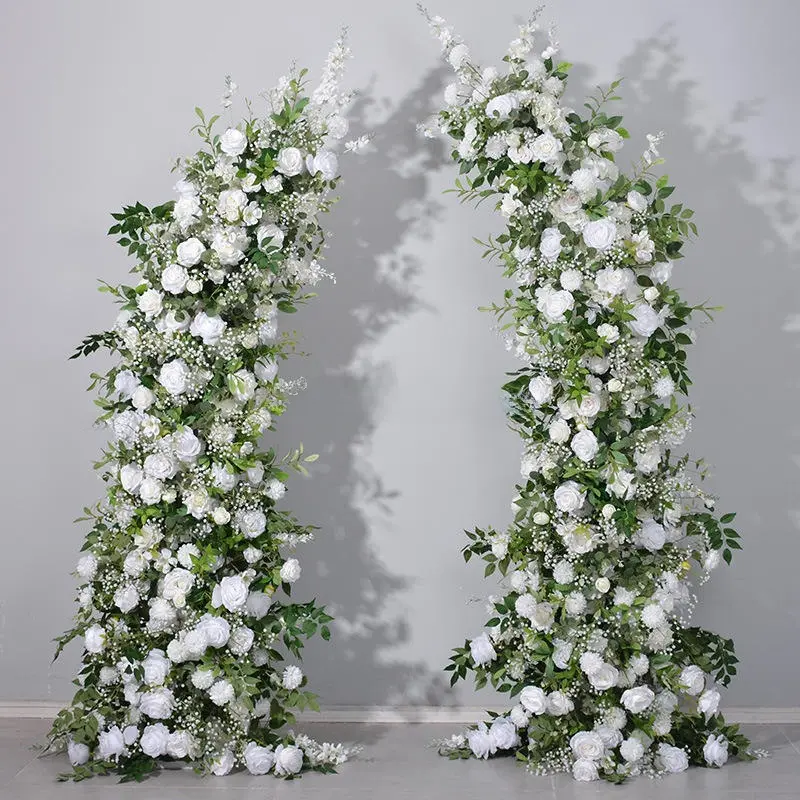
Both sides dense. Top dense. No bare metal. The hand test applies. The balance test applies. The rub test applies. The shade-placement check applies. That's four tests for deep red crescents. About 1 in 8 crescent arches fails the balance test. About 1 in 7 deep red crescents fails the final QC check. Same as red-white and blue-white. All three have extra color testing. All three have higher rejection rates. All three are worth it.
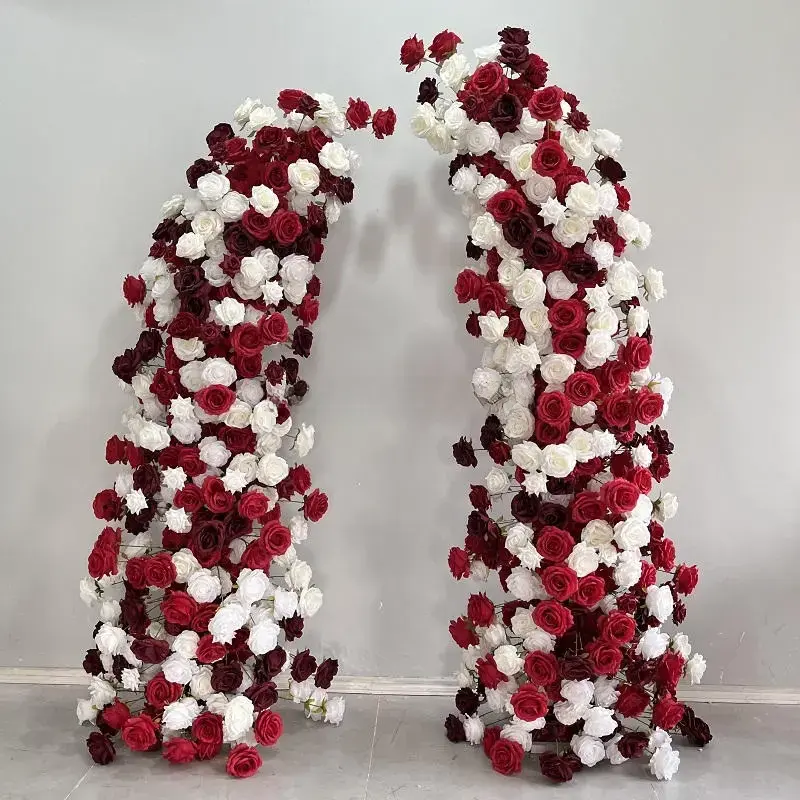
What I tell people who ask about deep red vs red-white: Red-white is soft, traditional, "classic wedding." Deep red is bold, dramatic, "statement piece." Red-white mixes red and white roses – about 40% red, 60% white. Deep red is 70% red, 30% greenery, no white. If your wedding is winter, vintage, gothic, or bold romantic – deep red is made for it. If your wedding is soft, spring, or traditional – red-white might be better. Also – red transfers dye more than white. If the bride will walk past the arch in a white dress, tell us. We'll spray extra color-fixing sealant on the bottom. It costs us more. We don't charge more. We just need to know.
What Matters About This Arch
Rub test – 50 rubs, every batch
Every batch of red flowers gets rubbed on white cotton 50 times. If color transfer exceeds level 3, the batch is rejected. About 12% fail – second highest after blue. Red dye molecules are the second-largest, sit near the surface, and transfer under friction. We spray color-fixing sealant on the bottom 30cm where dresses brush.
Three shades of red, not one
True red at the base, wine red through the curve, deep burgundy at the top. Three shades create depth that photographs richly. A single red blows out under camera lights and looks flat. 70% red, 30% eucalyptus. The green isn't filler – it's contrast. Red without green reads as corporate.
Asymmetric, not lopsided
Crescent shape means intentional asymmetry. Red is an advancing color – it looks closer than it is. So we use 10% more red flowers than a white arch of the same size, because red reads as denser even when it isn't. About 1 in 8 fails the balance check.
Frame in the box
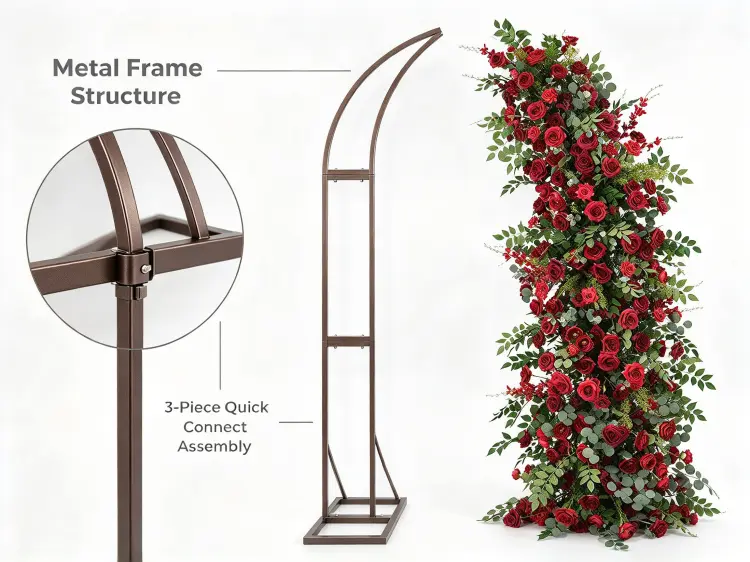
Always. Since 2020. Three pieces. Ten minutes. No tools. Powder coated dark bronze for red arches – white shows through every gap, black is too harsh. Dark bronze disappears between the roses. Our welder Zhao calls it "the polite color." I mention this in every product. People still ask. I get it.
How We Actually Make It
Factory Breakdown – Deep Red Crescent Arch
Frame
25mm iron tube, 1.5mm wall, bent on a custom crescent jig. Same jig as all crescents. Powder coated dark bronze – not white, not black. Dark bronze is the invisible frame color for colored arches. White frame shows through every gap. Black frame creates harsh shadows. Dark bronze just disappears. Our welder Zhao – 9 years – says bronze coating is "the polite color." I don't know what that means. He's usually right about frames.
Flowers
True red roses, wine red roses, deep burgundy roses, green eucalyptus leaves. Four types. Red goes through the rub test – 50 rubs on white cotton, level-3 transfer limit. About 12% of red batches fail. Eucalyptus gets the leaf-shed check. Sister Li runs the dyeing department. 14 years. She says "red wants to leave." I've stopped arguing with her about colors. She's right. Red dye molecules are the second-largest. They don't penetrate deep. They sit on the surface. Rub them, and they transfer.
Tying
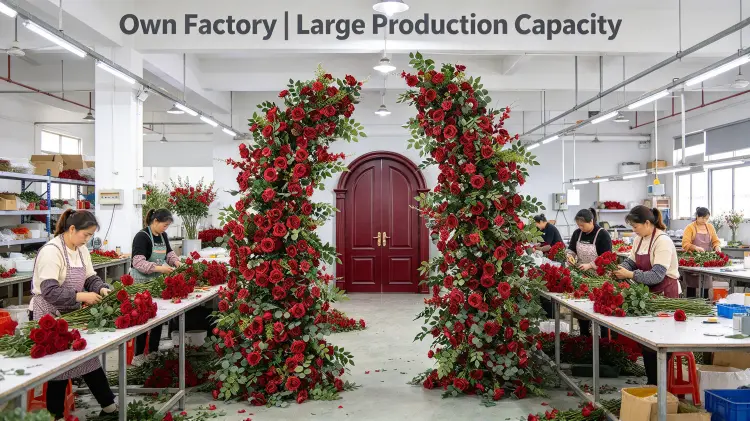
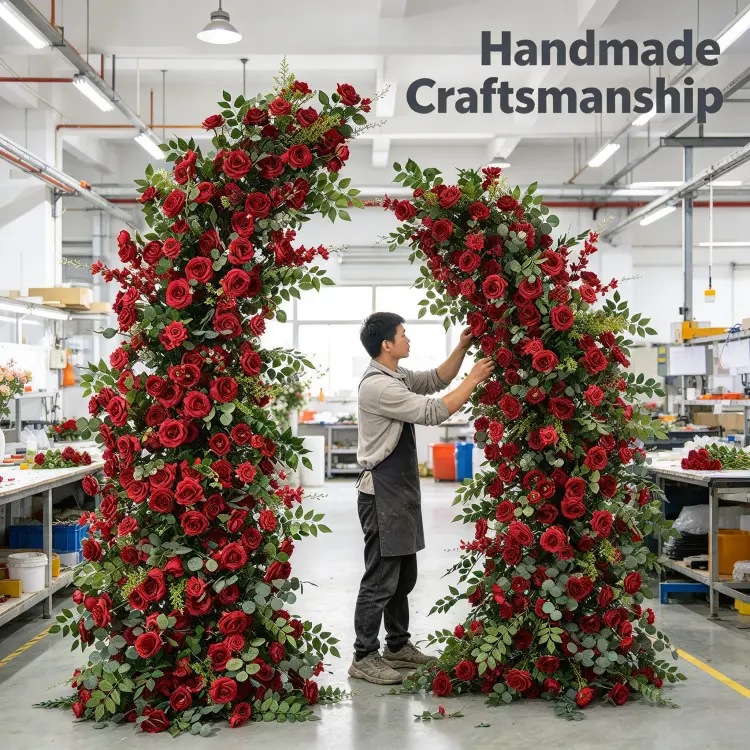
Deep red crescents take longer than white. Not because there are more flowers. Because of the shade placement. The tying team works in gradient zones: true red at the base, wine red through the curve, burgundy at the top, eucalyptus woven for contrast. Then they step back. Check the color gradient. Check for flat spots (too much red, not enough depth). Adjust. A Luxury deep red crescent takes about 8.5 hours. A Luxury white crescent takes about 8. The extra 30 minutes is all shade balancing plus 10% more red flowers for advancing-color density. Nobody counts the minutes. They just know red days are longer. And more frustrating. Because if the gradient looks wrong, you have to untie and retie.
QC
12 check points. Plus the hand test. Plus the balance test from 5 meters. Plus the rub test on flowers. Plus the color-fixing sealant on bottom 30cm. Plus checking from three angles (front, left 45°, right 45°). Deep red crescents have a high QC rejection rate: about 1 in 7. Tied with red-white and blue-white. White is 1 in 8. Deep red is 1 in 7 because red adds two failure modes: dye transfer and shade flatness. Wang Lei runs QC for colored arches. 8 years. He built the rub test station himself. He says "red leaves marks. We make sure it doesn't." I like that.
Packing
Frame comes apart in three pieces. Carton: 130×30×25cm. Same as all crescents. Red flowers are more prone to rub-transfer in shipping – if red sections rub against each other in the box, the dye can migrate. So we wrap red sections in tissue paper. Extra step. About 3 minutes per arch. Deep red damage rate about 3% – lower than blue-white's 4% because roses are tougher than hydrangea. The tissue paper helps. Doesn't eliminate.
The Los Angeles wedding, full story: Winter 2024. Planner wanted a deep red crescent for a winter wedding in downtown LA. We made it with our standard red dye. Her team set it up the night before. Bride did her first look the next morning. Walked past the arch. Silk train brushed against the bottom roses. Turned around. Six-inch red streak on white silk. Planner called me at 8am. I still have the photo. We overnighted a new arch from our Dallas-area partner warehouse. Sprayed extra color-fixing sealant on the bottom. It survived. The wedding was beautiful. But I couldn't stop thinking: how many other red arches had we shipped that left marks on dresses? Nobody had complained. Maybe they just didn't reorder. So Wang Lei built the rub test station. Now every red batch gets 50 rubs on white cotton before it reaches the tying floor. About 12% fail. The LA planner has ordered two more red crescents. Both for indoor weddings. She says "I learned my lesson about red and white dresses." I keep her first email in a folder labeled "red lessons." There are 3 emails in there. Each one taught me something about color. The subject line of the first one: "Red on the dress." Answer: you're right. It transferred. We fixed it.
Pricing – Per Piece
3 Sizes × 3 Quality Tiers
Frame included. MOQ 1 piece. Deep red uses three red shades with rub testing, but costs the same as other crescent colors.
2.0m (6.5ft)
$198
Standard / from
2.4m (8ft)
$268
Standard / from
2.8m (9ft)
$358
Standard / from
| Size \ Quality |
Standard |
Premium |
Luxury |
| 2.0m (6.5ft) |
$198 |
$248 |
$298 |
| 2.4m (8ft) |
$268 |
$328 |
$398 |
| 2.8m (9ft) |
$358 |
$428 |
$518 |
Which quality for a deep red crescent? I recommend Premium. Standard is fine for background decor where people won't walk up to it. But deep red arches get close – people touch them, photographers shoot them from 2 feet away, brides stand right next to them. A Standard deep red can show thin spots at the curve, and thin spots on red look like gaps in a wall. Premium eliminates that. The extra 10% red flowers we add for advancing-color density are already in all tiers – but Premium has more overall flower volume, which means the red reads as solid, not spotty. If it's a backdrop that nobody approaches, Standard works. If people will stand under it – and with a deep red crescent, they always will, it's dramatic – get Premium. I own this company and I'd buy Premium for deep red. That's not upselling. That's experience. Red is unforgiving. Three shades of red is doubly unforgiving. The eucalyptus helps. But density helps more.
White dress note: If the bride will walk past the arch in a white or light-colored dress, tell us when you order. We'll spray extra color-fixing sealant on the bottom 30cm (the zone where dresses are most likely to brush). It costs us about 5% more per arch. We don't charge more for it. We just need to know. Red transfers dye more than any other color except blue. The rub test catches batches that transfer too much. But no artificial flower is immune to hard rubbing against silk. For brides who will walk very close, consider Premium or Luxury – denser flowers mean less exposed stem and less contact surface.
Where Deep Red Crescent Arches Actually Get Used
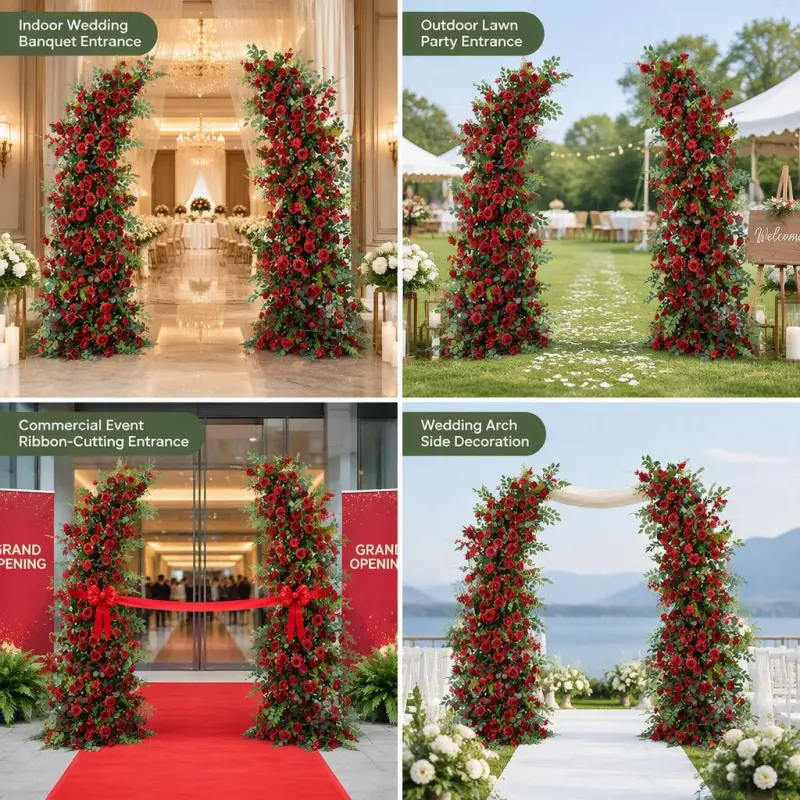
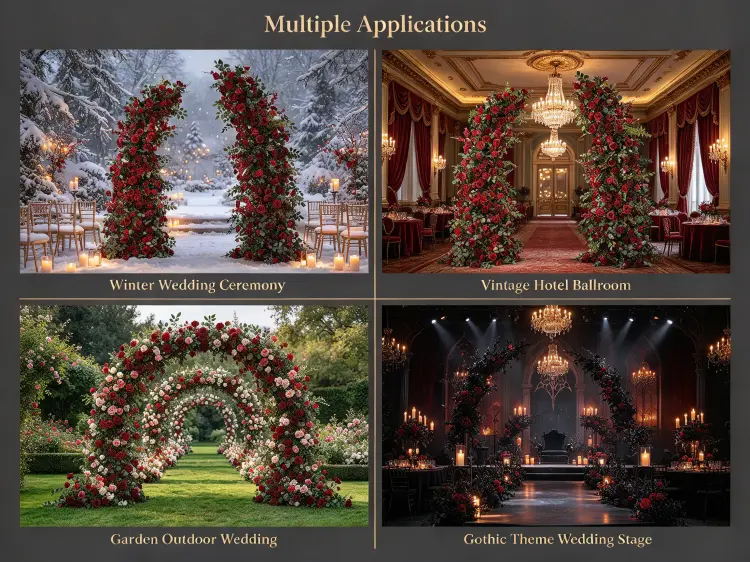
- Winter and holiday weddings – Deep red is the color of winter romance. The crescent curve adds drama to a season that can feel flat. We did 23 deep red arches for winter weddings last year. I know because the planners all mention "winter" or "holiday" or "Christmas" in their first email. I keep a tally.
- Vintage and retro weddings – Deep red feels timeless, old-Hollywood, 1940s glamour. The three-shade gradient (true red to burgundy) adds depth that a single red can't. Planners tell me deep red crescents are their go-to for "vintage romantic" themes. I believe them. Our deep red orders spike in fall and winter.
- Gothic and dark-romantic weddings – Deep red against black or dark venue decor is striking. The eucalyptus green keeps it from feeling flat. But – and this is important – make sure your venue lighting doesn't make the red look orange. Warm golden lights will shift red toward orange. We test for neutral and cool. We can't test for your venue's specific LEDs. Bring a swatch to the venue.
- Hotel ballroom ceremonies – Deep red pops against neutral ballroom walls. But warm uplighting can shift red toward orange or pink. Cool or neutral lighting is best for deep red. If your ballroom has warm lights, ask the venue if they can dim the warm uplighting near the arch. Or tell us – we can use a slightly bluer red base to compensate.
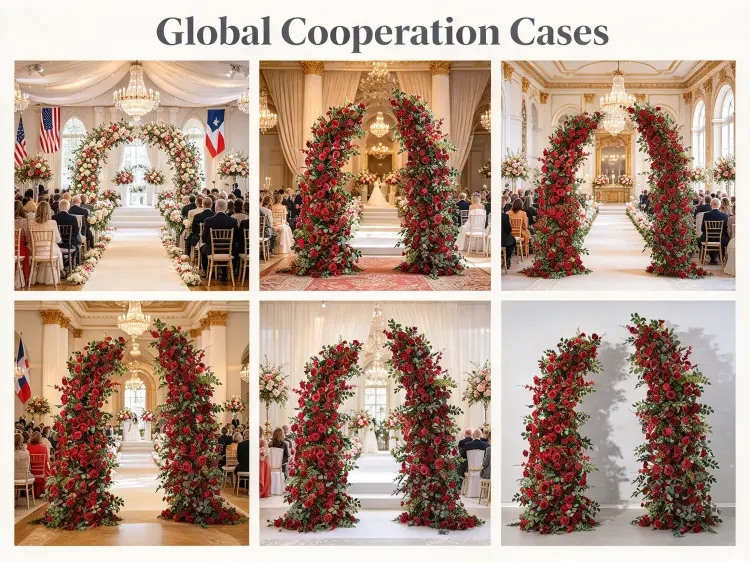
- Engagement parties and anniversary celebrations – Deep red feels celebratory, passionate, memorable. People take a lot of photos. The asymmetric crescent makes photos more interesting than a standard round arch. Planners send me the photos. I have a folder labeled "deep red photos." It's getting full.
- Rental companies – They tell us deep red crescents rent for 10-15% more than white crescents. Because deep red is a specific color request. Because "burgundy" and "wine" are trending wedding colors. Because winter themes are perennially popular. One rental company in Chicago told me their deep red crescent has the highest booking rate of any colored arch in their inventory during fall and winter. I don't know if that's universally true. He had a spreadsheet. I believed him. He's the LA planner's rental partner. Small world.
Specs
| Item |
Detail |
| Product Name |
Red Rose Crescent Flower Arch – Moon Gate Wedding Arch |
| Shape |
Crescent / Moon Gate / Asymmetric curved arch (not U-shaped) |
| Sizes |
2.0m (6.5ft) / 2.4m (8ft) / 2.8m (9ft) / Custom |
| Flower Types |
True red roses, wine red roses, deep burgundy roses, green eucalyptus leaves (4 types) |
| Color Ratio |
~70% red (three shades gradient base-to-top), ~30% eucalyptus greenery |
| Flower Count (8ft Luxury) |
~250 roses + eucalyptus (10% more than white arch due to red advancing-color density) |
| Color Testing |
Rub test: 50 rubs on white cotton, level-3 transfer limit. ~12% red batches rejected (second highest after blue) |
| Frame |
25mm iron tube, 1.5mm wall, custom bent asymmetric curve, powder coated dark bronze, 3 pieces |
| Assembly Time |
~10 minutes, no tools |
| Weight |
10-17kg depending on size and quality |
| Packaging |
Disassembled flat, 130×30×25cm carton, red sections tissue-wrapped to prevent rub-transfer |
| MOQ |
1 piece (standard sizes), 2 pieces (custom colors/shapes) |
| QC Rejection Rate |
~14% (1 in 7) – tied with red-white and blue-white for highest, due to rub test + balance check + shade placement |
| Factory |
Henan Xibo Flower Art Co., Ltd. – 4000㎡, 15 years, Zhengzhou China |
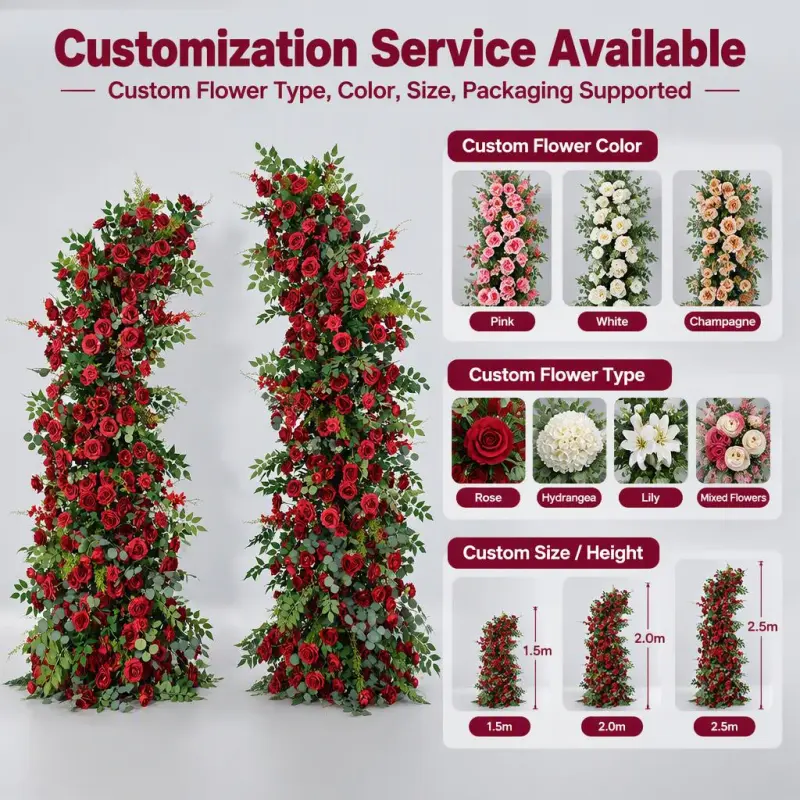
Customization
| Level | What's Included | MOQ | Lead Time |
|---|
| Stock Colors | 15+ stock colors including deep red, any size/quality, crescent shape as shown | 1 piece | 7-15 days |
| Custom Color | Pantone matching for red shades, custom flower mix, adjust red ratio, rub-tested dye | 2 pieces | 20-25 days |
| Custom Shape | Adjust curve openness, asymmetry degree, height difference, full custom frame bend | 2 pieces | 25-30 days |
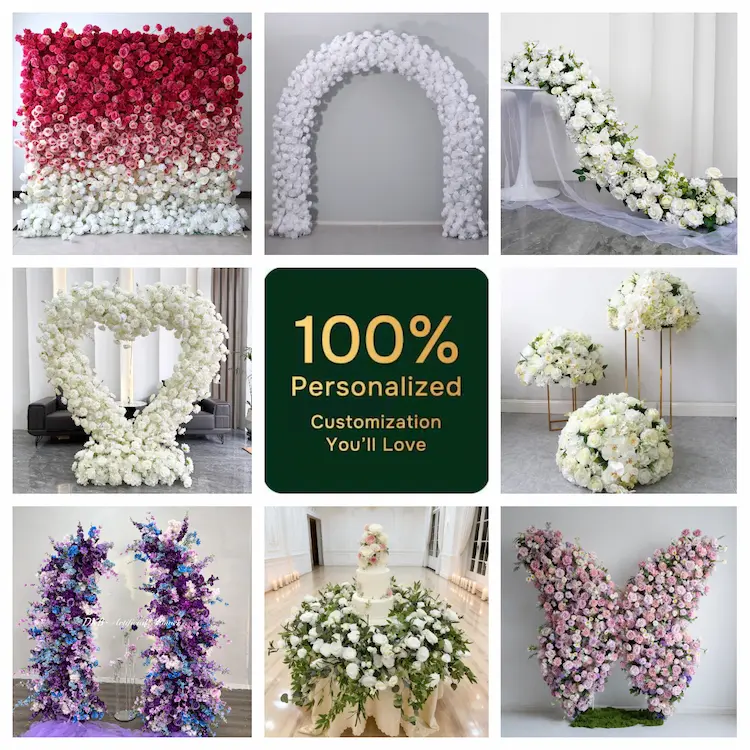
| Full Custom | Custom mix, size, shape, density, frame color, branded packaging | 5 pieces | 25-35 days |
Questions People Actually Ask
Will the red color rub off on wedding dresses or clothing?
This was our biggest lesson – the Los Angeles wedding where a red streak appeared on a white silk train. Now every batch of red flowers passes the rub test: 50 firm rubs on white cotton, max level-3 transfer. About 12% fail and get sent back. We also spray color-fixing sealant on the bottom 30cm where dresses are most likely to brush, and wrap red sections in tissue for shipping. No system is perfect – if a client grabs a rose hard and rubs, some transfer is possible with any silk flower. But normal contact? The rub test catches it before it ships.
Why three shades of red instead of one?
A single red arch blows out under camera lights – the red channel overexposes, the arch looks flat and loses all dimension. Three shades – true red at the base, wine red through the curve, deep burgundy at the top – create depth that photographs richly. It also looks better in person: your eye moves through the gradient instead of hitting a flat wall of color. We can do single-shade red if you want, but we don't recommend it for arches that will be photographed.
Is this arch suitable for outdoor use?
Yes, with notes. The frame is powder-coated iron tube – fine outdoors, including salt air (wipe down after beach use). The flowers are UV-resistant silk – red fades slower than blue but faster than white. Expect 1.5-2 years of outdoor use before noticeable fading (white lasts 3-4 years). Wind is the bigger concern: crescent shape has a higher center of gravity than U-arch. We include outdoor ground stakes. For windy locations, add sandbags to the base. Direct sunlight will fade red over time – morning or late-afternoon ceremonies are best.
How is this different from the red-white crescent arch?
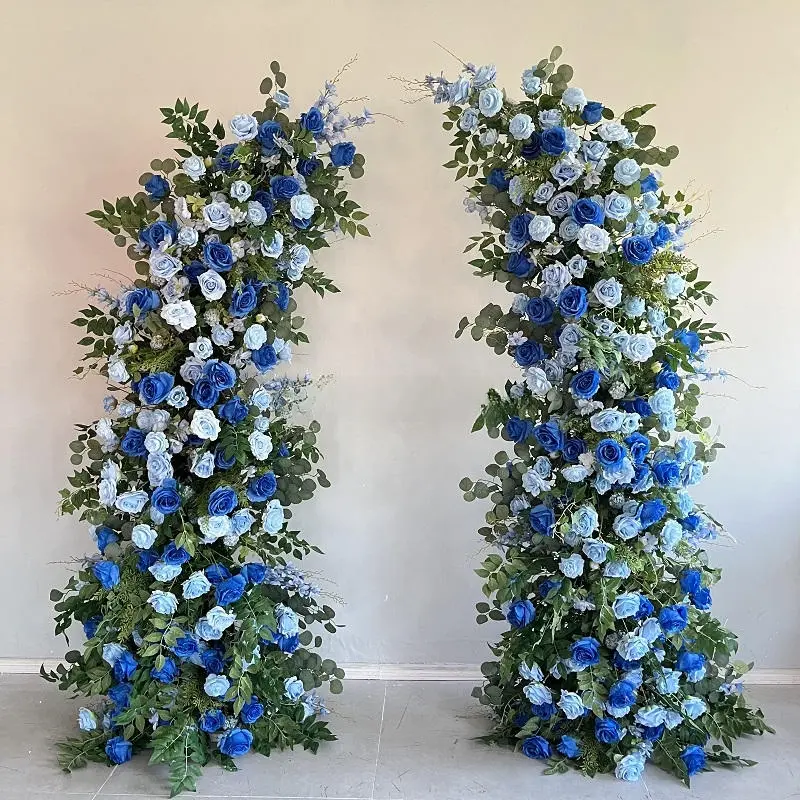
The red-white arch (our #2) mixes red and white roses – about 40% red, 60% white. It's softer, more traditional, more "classic wedding." This deep red arch is 70% red, 30% greenery, no white. It's bolder, more dramatic, more "statement piece." The red-white uses three flower types (two reds + white). This one uses four (three reds + eucalyptus). Both use the same frame, same rub test, same quality tiers. The difference is mood: red-white says "romantic classic." Deep red says "bold, unforgettable, winter/vintage/gothic."
Why does red need 10% more flowers than white?
Red is an advancing color – it visually moves toward the viewer. This means gaps between red flowers read as larger and more obvious than gaps between white flowers. If we used the same flower count as a white arch, the red arch would look thinner, spottier. So we add about 10% more red roses. Mei, our QC lead, has been checking this for 11 years. She stands 5 meters back and squints. If she sees gaps, it fails. The 10% extra is what makes red look as dense as white. It's not marketing – it's optics.
What's the best way to photograph a red arch?
Red is the hardest color for camera sensors. It overexposes easily. Tell your photographer to underexpose by 1/3 to 2/3 of a stop for red arches. Avoid direct flash on the roses – it washes out the three shades and makes the arch look flat. Natural light or soft side lighting shows the gradient best. If shooting in a dark venue with warm uplighting, the red will shift toward orange – that's the light, not the arch. Our three-shade gradient helps because even if one red blows out, the other two hold detail.
How do I clean red flowers? Will cleaning make them fade faster?
Dust: soft brush or low-pressure air. Stains: damp cloth with mild soap. Don't soak. Don't use bleach – it strips red dye completely. Don't use alcohol-based cleaners – they dissolve the dye coating. For rental companies: quick dust-off between events is fine. Red shows dust less than white but shows fading more. With proper cleaning and storage (away from direct sun, cool dry), a red crescent lasts 2-3 years. Heavy rental use might need red touch-up after 18 months. We sell replacement red rose packs.
Does the frame come included? What color is it?
Yes. Always. Since 2020. Three pieces. Ten minutes. No tools. The frame is dark bronze powder coating. Not white – white shows through every gap on a red arch and looks like a mistake. Not black – black creates harsh shadows between red roses. Dark bronze is the invisible frame color for red. It disappears between the flowers. Our welder Zhao calls it "the polite color" – it does its job and doesn't demand attention. I mention this in every product. People still ask. I get it – a lot of suppliers sell flowers only. We don't. Frame is always included.
Red That Stays on the Arch, Not on the Dress
We're Xibo Floral. 4000 square meters. 15 years. Henan, China. Founder Kupeng Yang – that's me. I wrote every word of this page myself. No AI. Just me, a keyboard, and the photo of that red streak on a white dress that I keep in my desk drawer. (Okay, spellchecker. But just spellchecker. The words are mine.)
Red taught me that a flower isn't just what it looks like. It's what it leaves behind. On fabric. On gloves. On memories. A beautiful arch that ruins a wedding dress isn't a beautiful arch – it's a problem. The Los Angeles planner caught us. She was right. We were wrong. So we built the rub test. Fifty rubs. White cotton. Level-3 limit. 12% fail. That's a lot of rejected flowers. But it's better than ruining a wedding.
If you want a deep red crescent arch that's bold, romantic, and won't leave marks on your client's dress – contact us. Send us a photo of your venue. Tell us about the lighting. Tell us if the bride will walk past it. We'll match the red shades to your space. We'll rub-test every flower. We'll seal the bottom. Most suppliers check red by looking at it. We check by rubbing it. Because red leaves marks. And we don't.
Contact Us for Deep Red Crescent Arch
P.S. LA planner, thank you. Your "red on the dress" call changed how we test every red flower that leaves this factory. The whole red category is better for it. Well, our corner of it anyway. And the rub test station? Wang Lei named it "the red betrayal station." I think that's funny. He doesn't. He's serious about red.
Written by Kupeng Yang, Founder of Xibo Floral – October 10, 2026. Deep red crescent specialist. LA wedding survivor. 3 red lessons and counting.
↑